
April 6 Is the Only Date That Matters
Five Weekly Losses, a Broken Yen, and the Countdown to War or Peace

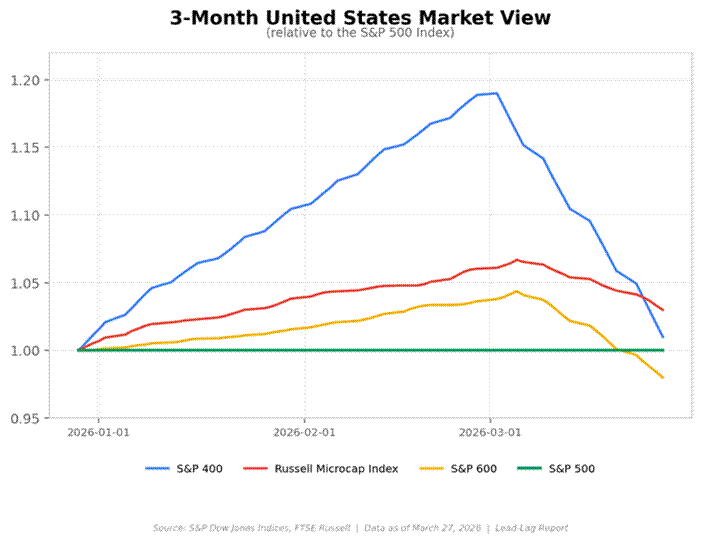
Five consecutive weekly losses. The worst monthly decline in the S&P 500 since 2022. And a VIX that just closed above 31 for the first time since the initial Iran shock. If you’re looking for a bottom in this market, the tape is telling you we haven’t found one yet. The S&P 500 closed the week at 6,368.85, down 3.42% on the week and 6.74% year-to-date. Three out of four stocks in the index fell on Friday alone. The Dow entered formal correction territory—down more than 10% from its February record high—and joined the Nasdaq in what is now a broad-based, multi-week liquidation. The Russell 2000, interestingly, posted a mild gain of 0.36% on the week, making small caps the relative outperformer for the first time in three weeks. But let’s not call that a rotation. IWM is still down 2.28% year-to-date and 10.5% from its January high. This is a market where the best you can say about small caps is they fell less.
The sector story is becoming cartoonishly divergent. Energy, measured by XLE, is now up 37% year-to-date. Software, measured by IGV, is down 25%. That is a 62-percentage-point spread between the best and worst performing sectors in the U.S. market. I don’t think investors fully appreciate how extreme that is. IGV fell another 7.35% this week alone—the worst weekly performance of the month—and is now nearly 35% below its 52-week high. Meanwhile, XLE hit a new year-to-date high at $62.79, gaining 5.48% on the week. Consumer discretionary was the worst broad sector, down 2.89% on Friday as cruise lines, restaurants, and retail got hammered by gasoline-price anxiety. Amazon and Meta each fell 4% on Friday. The VIX closed at 31.05, up from 26.78 the prior week. What’s notable is the VIX “stair-stepped” higher even on days when stocks rallied, indicating persistent elevated demand for hedges regardless of direction.
The macro data confirmed the uncomfortable picture. The University of Michigan consumer sentiment final reading for March came in at 53.3, below both the preliminary estimate of 55.5 and February’s 56.6. One-year inflation expectations surged to 3.8%—up 34% from the prior month’s 3.4%. This is the kind of expectations unanchoring that keeps the Fed awake at night. Vice Chair Jefferson acknowledged the dilemma in his March 26 speech: “I confront an outlook where there is downside risk to the labor market and upside risk to inflation.” He estimated February core PCE at 3.0%—“little progress in lowering core inflation over the past year.” Governor Barr echoed the same message. The April FOMC hold probability stands at 94.8%. Betting markets now give a 26-to-41% chance of a rate hike in 2026. Q4 GDP was revised down to 0.7% from 1.4%. The polite word is “stagflation.” The honest word is “trapped.”
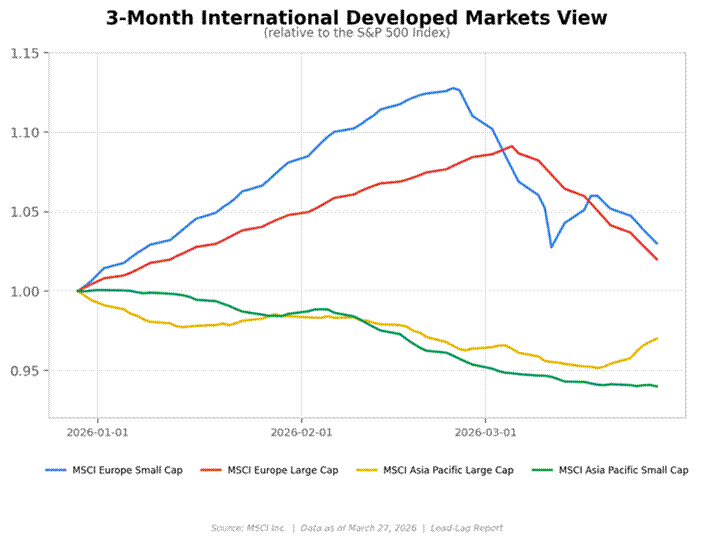
European markets whipsawed all week on conflicting Iran signals. The STOXX 600 managed a tiny +0.35% gain, but that number masks violent daily swings—up 1.3% Wednesday on de-escalation hopes, down 1.2% Thursday after Lagarde warned markets were “too optimistic,” and down nearly 1% Friday on the U.S. selloff. The DAX closed at 22,300, roughly 12% below its pre-war February high. The FTSE 100 briefly reclaimed 10,000 mid-week before giving it back, closing at 9,967. ECB President Lagarde’s March 25 speech at the ECB Watchers Conference was the week’s most important central bank communication. She called Iran “a real shock” and outlined a three-principle framework for responding to energy shocks. The key signal: J.P. Morgan and Barclays now forecast up to three ECB rate hikes in 2026; Goldman Sachs expects two, in April and June. The ECB went from a cutting cycle to a potential hiking cycle in less than a month. European natural gas prices are up 89% since February 28. The OECD cut the eurozone GDP forecast to 0.8% from 1.2%.
