
The Reserve Cushion Was Thinner Than It Looked
Reserves are large in dollars but thin relative to the system they must finance. SRF activation and repo spreads show the Fed's ample-reserves cushion is smaller than the headline balance implies.
A positive slope is a funding condition, not proof that growth has absorbed the baton. The August 2026 curve is positive again, but the payroll and credit data have not yet confirmed the handoff.
Credit reports are catching up to the payment pause, but the real macro hit arrives later
New issuance can make the maturity schedule look safer while quietly transferring the problem into coupons, covenants, and weaker borrowers
OBDC yields 10.8% and trades at a 19% discount to NAV of $14.26. Moody's Baa2 rated, 27bps annual net loss rate since 2016 inception, 110% base dividend coverage. The scale paradox: is a $15B BDC at a 19% discount a value play or a value trap?
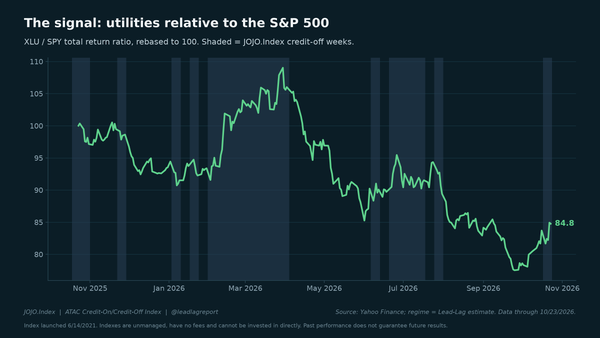
I've found that the market rarely warns you in the language you're expecting. Right now the headlines say inflation is moderating and growth is fine --- and yet core CPI ticked higher to 2.90%, energy inflation accelerated to 23.50%, and utilities, the most rate-sensitive and defensive sector in...
Equity volatility is compressed to multi-year lows while the funding currency of the global carry trade is signaling a regime change. The yen is not a currency story. It is a leverage-in-the-system story that ends with a coordinated deleveraging event.
The Securities and Exchange Commission proposed in Release
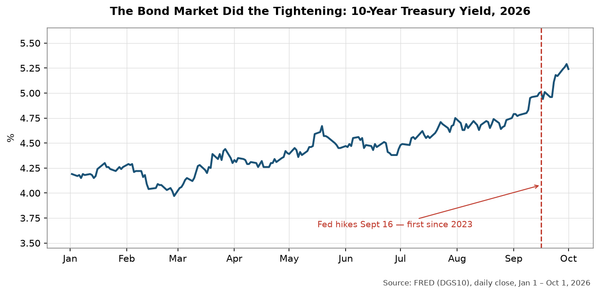
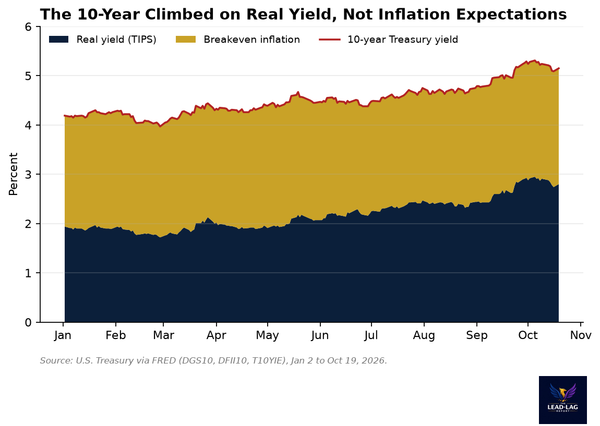
The Treasury's real reaction function is not GDP or unemployment. It is the term premium on the 10-year. If long yields spike into an auction cycle, the administration will tolerate equity drawdowns rather than let the bond market break.
On 7/2/2026, the U.S. Department of Energy issued a Notice of
Japan is not a passive holder of US Treasuries. Japan is the marginal setter of long-end yields, and the reverse carry trade unwind is a forced-selling mechanism that policymakers cannot stop with rate cuts or QE.
On 7/3/2026, the White House announced a plan to eliminate up to 702