
Record Highs, Record Earnings, and a Strait That May or May Not Be Open

KEY HIGHLIGHTS
• The S&P 500 surged 4.5% to close at 7,126, its first record high since January, while the Nasdaq gained 6.8% and posted its longest winning streak since 1992 at 11 consecutive sessions.
• Major bank earnings exceeded expectations across the board, with JPMorgan reporting $5.94 EPS on $50.5 billion revenue, Goldman Sachs posting its second-highest quarterly profit ever at $17.55 EPS, and Morgan Stanley delivering record revenue of $20.6 billion with a 27% return on tangible equity.
• Oil collapsed on Friday after Iran declared the Strait of Hormuz “completely open,” sending WTI down 11% to $84 and Brent down 10% to $88, though the U.S. naval blockade on Iranian ports remains in place and Iran’s parliament speaker threatened to re-close the Strait unless it is lifted.
• An Israel-Lebanon 10-day ceasefire took effect Thursday evening, brokered by Vice President Vance, adding momentum to broader peace efforts as U.S. and Iranian delegations prepare for a potential second round of talks in Islamabad on Monday, with the April 22 ceasefire expiration looming.
_______________________________________________
THE SURFACE NARRATIVE
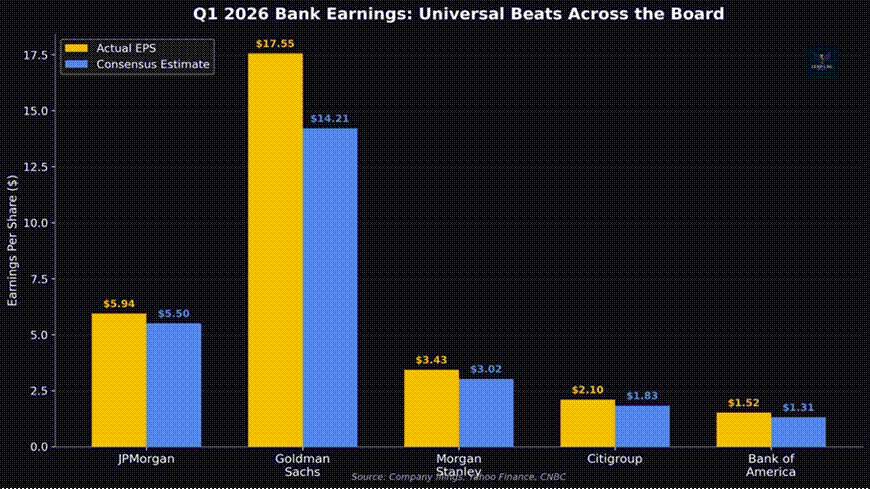
Figure 1: Q1 2026 Bank Earnings vs. Consensus Estimates
The S&P 500 closed above 7,000 for the first time on Wednesday. By Friday it had cleared 7,100. The Nasdaq composite set a new all-time high, its first since October, and extended its winning streak to 11 consecutive sessions, the longest since 1992.1 The Russell 2000 gained 5.6% for the week. Every major U.S. equity index is now positive year-to-date. From its late-March correction low, the S&P 500 has rallied more than 12% in less than three weeks.
The week began with Goldman Sachs reporting its second-highest quarterly profit in history. Net revenues reached $17.2 billion. Earnings per share came in at $17.55, with a 19.8% return on equity and a 21.3% return on tangible equity.2 On Tuesday, JPMorgan followed with $16.5 billion in net income on $50.5 billion in managed revenue, both up roughly 10% year-over-year. Investment banking fees rose 28%. Fixed income revenue climbed 21%. Jamie Dimon warned about the “considerable turbulence” ahead but the numbers did not reflect it.3
Wednesday brought Morgan Stanley’s results, the most impressive of the group. Record quarterly revenue of $20.6 billion. Equity trading revenue hit $5.15 billion, a record, driven by commodities and derivatives activity during the March volatility. Fixed income posted $3.4 billion, a post-crisis record. Net new assets in wealth management reached $118 billion. The stock surged 4.8%, approaching its 52-week high.4 Citigroup, Wells Fargo, and Bank of America all reported within the same window, and the pattern was consistent: trading desks monetized volatility, investment banking pipelines reopened, and credit quality held.
By Thursday, TSMC delivered results that confirmed the AI infrastructure cycle remains intact. Revenue reached $35.9 billion, up 40.6% year-over-year in dollar terms. Net income jumped 58%. Gross margins expanded to 66.2%. Advanced nodes at 7 nanometers and below accounted for 74% of wafer revenue, with 3-nanometer alone contributing 25%.5 Management guided second-quarter revenue to $39-40.2 billion and maintained its full-year target of above 30% growth in dollar terms. The AI capex cycle, far from peaking, appears to be accelerating.
Netflix reported after the bell on Thursday. Revenue of $12.25 billion beat estimates, up 16.2% year-over-year. Operating margin expanded to 32.3%. But GAAP earnings per share of $1.23 missed the $1.34 consensus, largely due to the $2.8 billion Warner Bros. termination fee distorting comparisons. The stock fell 9% in after-hours trading.6 The reaction mattered less than the signal: even in a market willing to forgive nearly everything, execution without narrative support gets punished.
THE REAL CATALYST
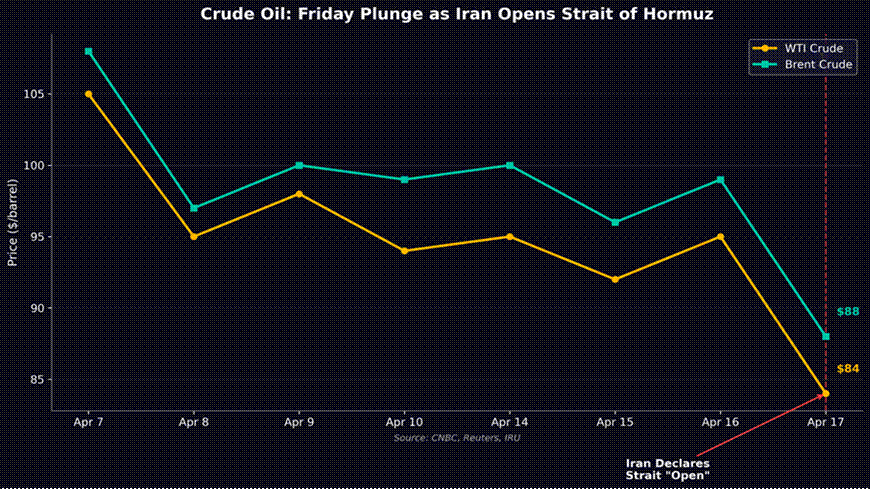
Figure 2: Crude Oil Prices, April 7-17, 2026
The real story of the week was not in earnings. It was in the sequence of diplomatic breakthroughs that began Thursday evening and accelerated into Friday. On Thursday, an Israel-Lebanon 10-day ceasefire took effect at 5 p.m. Eastern, brokered in part by Vice President Vance, who had been pressing Israel to exercise greater restraint in Lebanon.7 On Friday morning, Iran’s Foreign Minister Abbas Araghchi announced that the Strait of Hormuz was “completely open” to commercial vessels, though ships must follow a “coordinated route” approved by Iranian maritime authorities.8
President Trump immediately posted that the Strait was “COMPLETELY OPEN AND READY FOR BUSINESS.” Oil futures collapsed. WTI fell 11.1% to $84.26 per barrel. Brent dropped 10.3% to $88.38.9 Within the same hour, Iran’s parliament speaker Mohammad Bagher Ghalibaf contradicted the foreign minister, warning that Iran would shut the Strait again unless the U.S. lifts its naval blockade on Iranian ports. CENTCOM reported that 21 vessels had been turned back since the blockade began on April 13.10
The market chose the optimistic interpretation. And for one day, it was rewarded. The S&P 500 gained 1.2% on Friday. Gold held near $4,841, barely flinching.11 Credit spreads continued to tighten, with BB-rated high-yield spreads falling to 1.72% on Monday from 1.77% the prior Friday, though they drifted back to 1.75% by midweek.12 The broad ICE BofA High Yield index compressed from 2.94% to 2.84% before settling around 2.85%.13
The message from credit, equities, and commodities is now internally coherent for the first time since the war began: the market has decided this conflict is ending. Whether the market is correct depends on what happens in Islamabad when the ceasefire expires on April 22.
