The Ceasefire Dividend
Oil Crashes 11%, the S&P Posts Its Best Day in a Year, and the Peace Trade Finally Has a Price

Below is an assessment of the performance of some of the most important sectors and asset classes relative to each other with an interpretation of what underlying market dynamics may be signaling about the future direction of risk-taking by investors. The below charts are all price ratios which show the underlying trend of the numerator relative to the denominator. A rising price ratio means the numerator is outperforming (up more/down less) the denominator. A falling price ratio means underperformance.
LEADERS: THE WAR PREMIUM FADES, BUT THE ROTATION IT CREATED STILL LEADS
Energy (XLE) – Still the Three-Month King, but the Crown Is Slipping
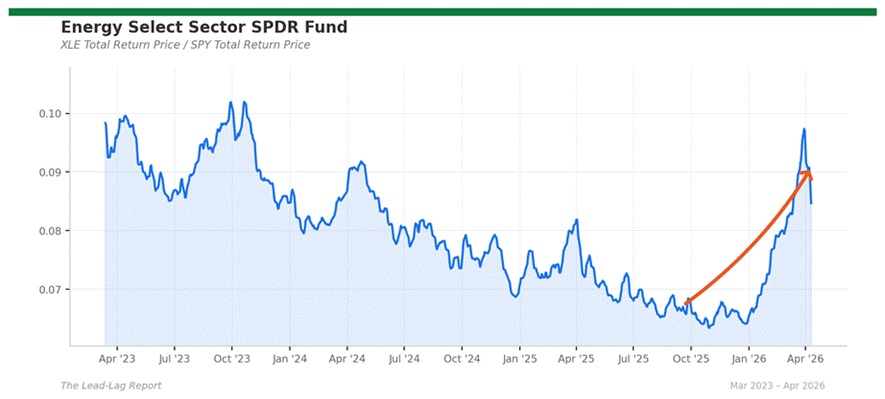
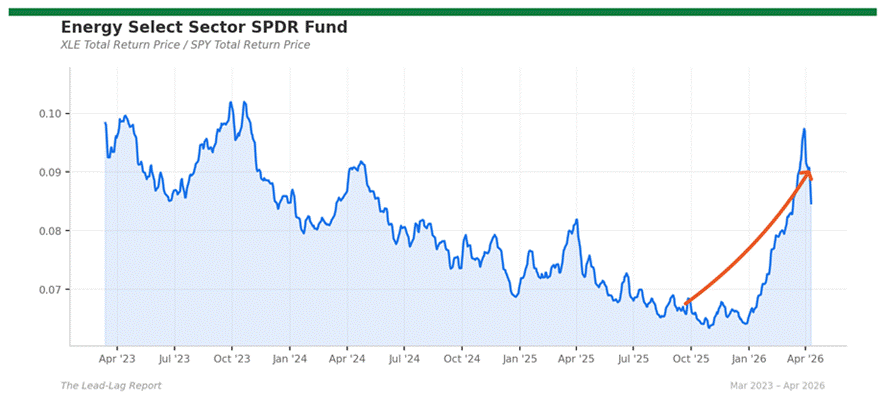
The ceasefire that arrived late Tuesday changed everything for energy. The XLE/SPY ratio crashed 7.5% this week — the second consecutive week of violent underperformance — as WTI crude collapsed from $112 to $95.63 on the two-week ceasefire agreement between the U.S. and Iran. But the three-month outperformance remains an extraordinary 25.1%, keeping energy firmly in the leader column despite the weekly carnage. The math is straightforward: even after two weeks of selling, energy has given back only a fraction of the gains accumulated during the war’s escalation. The ceasefire, brokered by Pakistan and announced just two hours before Trump’s 8pm deadline to strike Iran’s power grid, is contingent on Iran reopening the Strait of Hormuz. Iran agreed but warned its “hands remain on the trigger.” The market is pricing roughly 50% odds that this ceasefire holds, which means energy equities are still far above where they would trade in a genuine peace scenario. I’m keeping energy as a leader on the three-month trend, but the war premium unwind is the single most important trade to monitor.
Utilities (XLU) – Defensive Leadership Bends but Does Not Break
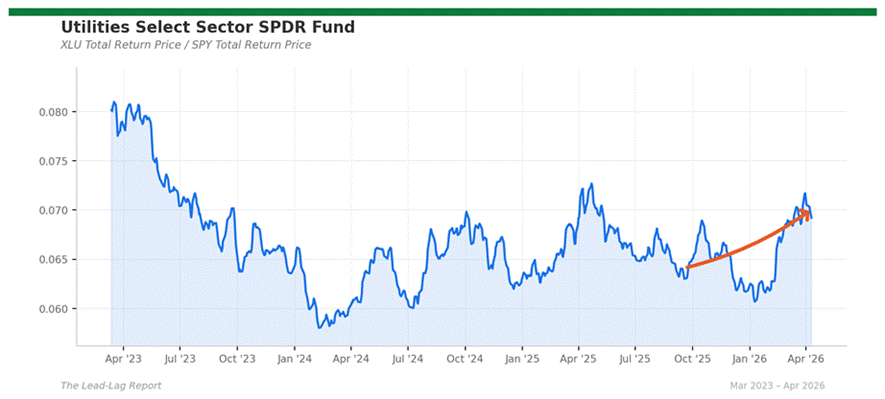
Utilities underperformed SPY by 1.4% this week but the three-month outperformance of 13.3% remains intact. In a week where the S&P 500 surged 3.7% and posted its best single day in a year (+2.5% on Wednesday’s ceasefire announcement), defensive sectors naturally underperform on a relative basis. The 10-year yield settling at 4.289% provides a supportive rate environment, and the AI data center power demand narrative continues to offer a structural growth catalyst. The VIX dropping below 20 for the first time since the war began is the key signal that the fear trade is fading, which will pressure defensive leadership going forward. For now, the three-month trend holds.
Materials (XLB) – Reshoring Survives the Peace Trade
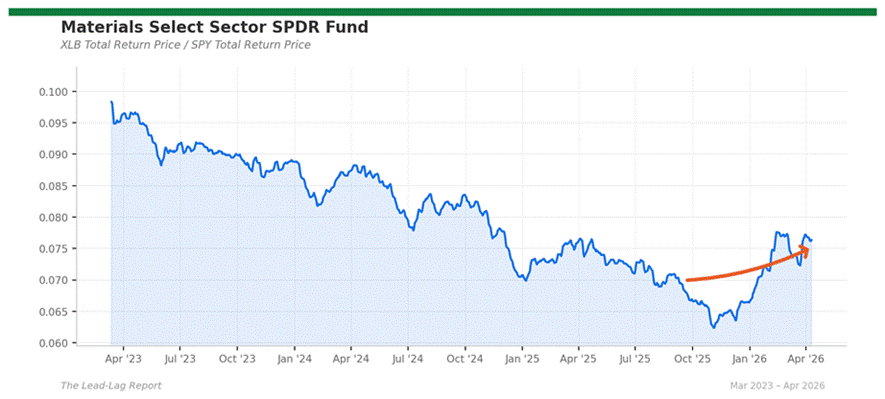
Materials gained 0.3% relative to SPY this week and maintain a 10.2% three-month outperformance. The sector’s resilience during the ceasefire rally is notable: unlike energy and other war trades, materials did not sell off because the reshoring, defense spending, and tariff-driven demand are not dependent on the Iran conflict. ISM Manufacturing at 52.7 continues to support the fundamental case. The one-month gain of 2.7% confirms the trend is intact and arguably more durable than energy’s because it is not at risk of a ceasefire unwind.
Industrials (XLI) – The Dual-Scenario Winner
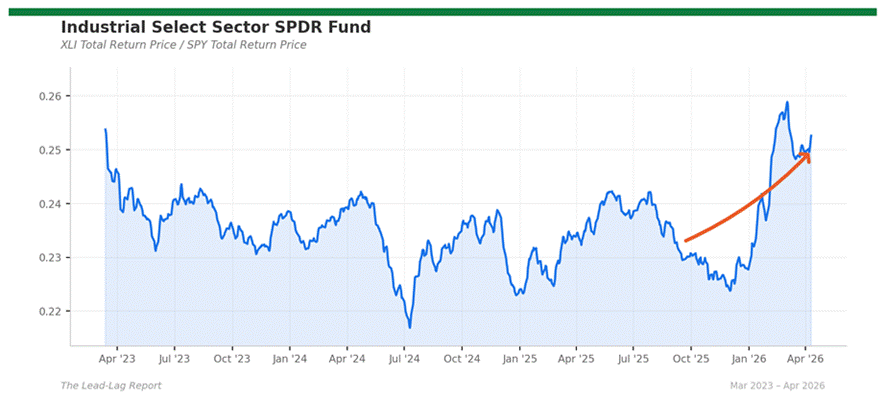
Industrials gained 1.0% relative to SPY this week, outperforming both defensives and energy during the ceasefire rally. The three-month outperformance of 8.2% and one-month gain of 1.8% make industrials one of the most consistent leaders of the cycle. The sector led all S&P 500 sectors this week at +5.3% per Financial Synergies’ weekly recap. Industrials benefit from war through defense contracts and from peace through transportation and logistics normalization. This is the rare sector that wins regardless of the ceasefire’s outcome.
Real Estate (XLRE) – Income Assets Catch a Falling-Rate Bid
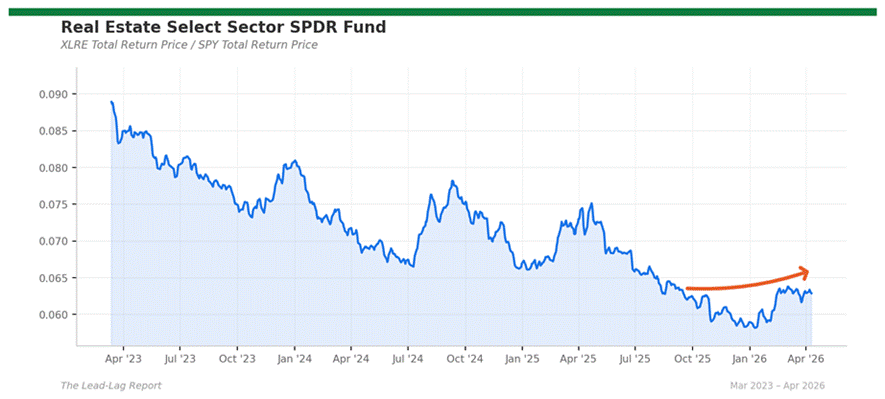
Real estate underperformed SPY by 0.6% this week but the three-month ratio at 8.4% remains firmly in leader territory. The 10-year yield at 4.289% is lower than the 4.44% peak from two weeks ago, and if the ceasefire holds and oil continues to decline, the disinflationary impulse would push yields lower and benefit rate-sensitive real estate. Data center REITs continue to provide a structural growth engine within the sector.
Emerging Markets (EEM) – The Ceasefire’s Biggest Winner
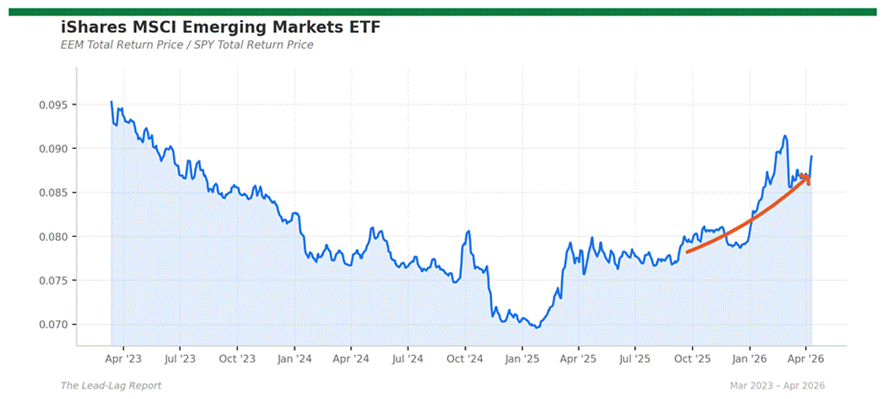
This week’s ceasefire announcement was a game-changer for emerging markets. The EEM/SPY ratio surged 2.8% for the week and is now up an impressive 8.0% over three months. Energy-importing EM nations — India, South Korea, and Southeast Asia in particular — benefit directly from oil’s collapse from $112 to $96. International equities rallied 3.5% on Wednesday alone per the Financial Synergies recap. The dollar’s stabilization and the tightening of credit spreads to January levels provide additional tailwinds. EM equity has quietly become one of the strongest three-month leaders as the war premium unwinds and the peace dividend flows to the biggest victims of high oil prices.
International Developed (EFA) – Europe and Japan Get Their Reprieve