

Key Highlights
Investor positioning is shifting toward consumer staples as volatility rises and earnings visibility fades.
Pricing power and brand loyalty are allowing select staples companies to defend margins despite slower growth.
Essential household goods, food, tobacco, and discount retail historically outperform during market corrections.
Predictable cash flows and durable demand are once again being rewarded as risk appetite weakens.
Why Consumer Staples Are Regaining Leadership
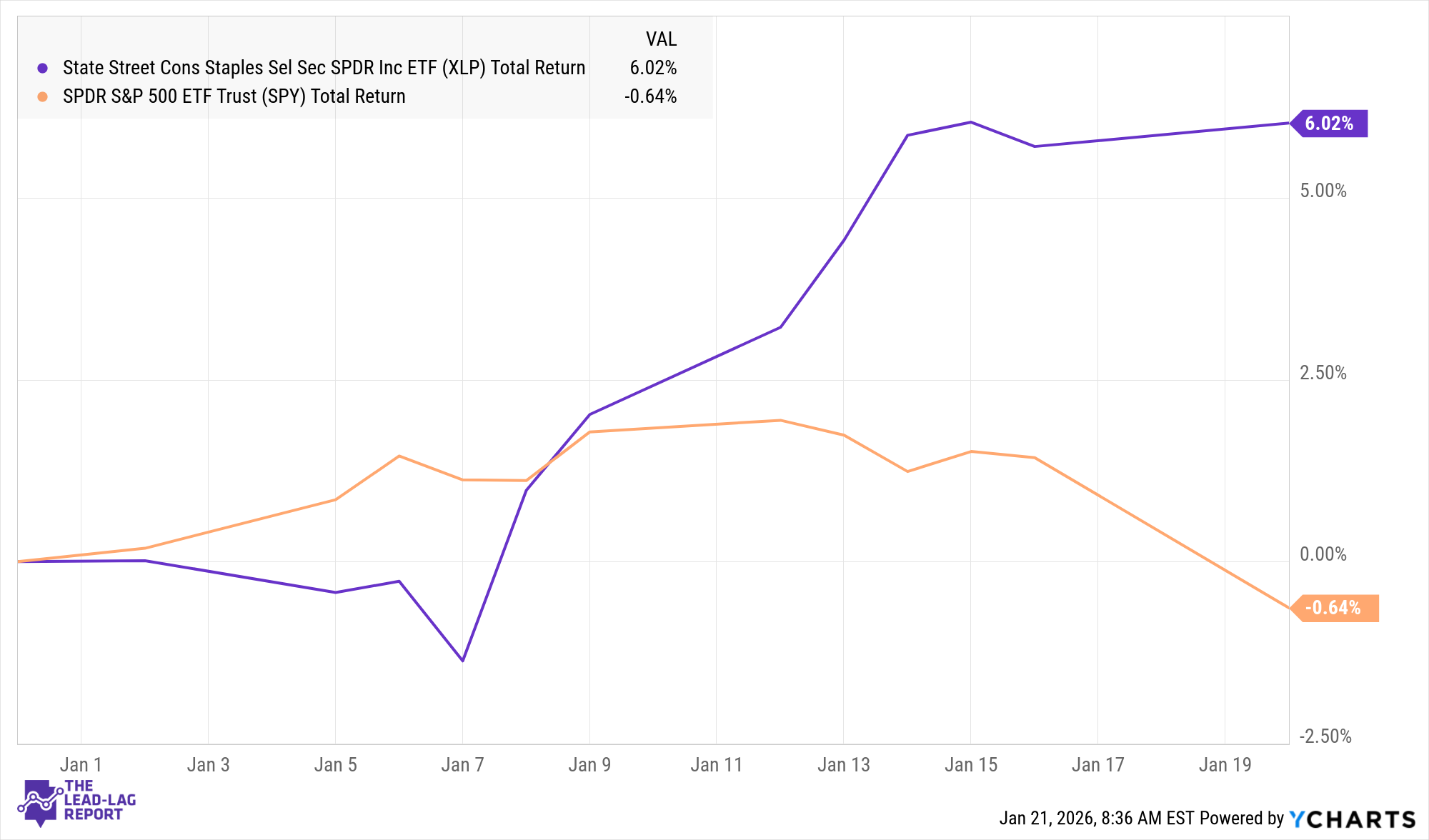
Consumer staples stocks are quietly reclaiming leadership as investors rotate toward safety amid rising market volatility and late-cycle uncertainty. After trailing high-growth technology shares for much of 2025, staples have begun to outperform as risk appetite fades and capital seeks durability rather than momentum.¹
Staples companies sell necessities rather than aspirations: food, household products, beverages, tobacco, and essential retail goods. Demand for these products tends to remain steady even as economic growth slows. During downturns, consumer behavior often shifts in ways that favor staples. Households eat more meals at home, trade down to value brands, and prioritize essentials over discretionary spending.²
The current environment reflects these dynamics. Inflation has eased but remains persistent enough to pressure discretionary budgets. At the same time, earnings visibility across cyclical sectors has deteriorated. In contrast, many staples companies continue to demonstrate pricing power, stable volumes, and predictable cash flows. The result is renewed investor interest in businesses that can defend margins and dividends even if broader markets weaken.
Pricing Power and Brand Loyalty: Household, Food, and Beverages
Procter & Gamble (PG) remains the archetype of defensive consistency. The company has navigated a challenging consumer environment by leaning on brand strength and disciplined pricing. Even as volumes flattened, modest price increases across core categories allowed Procter & Gamble to maintain organic growth while preserving margins.³ Management has emphasized stability rather than strength in consumer demand, yet that stability has proven sufficient to sustain earnings through cost pressures and currency headwinds.⁴
What distinguishes Procter & Gamble is not growth, but resilience. Its portfolio of everyday essentials allows for incremental price adjustments without triggering meaningful demand destruction. Combined with scale efficiencies and steady innovation, this has kept cash flows predictable and dividends reliable during periods of market stress.⁵
PepsiCo (PEP) offers a different form of defensiveness through diversification. Its combination of beverages and snacks creates multiple demand anchors across income levels and geographies. Recent results showed continued pricing gains with limited volume erosion, supported by strong brand loyalty and international expansion.⁶
