Lead-Lag Live Deep Dive: Rethinking Cash in a Higher-Rate World

Key Takeaways
- Cash is no longer a passive holding. In a higher-rate, more volatile environment, liquidity itself has become a strategic asset.
- TRSY is designed as a modern cash-management tool, offering exposure to U.S. Treasury bills with maturities of zero to one year.
- Unlike CDs, TRSY trades intraday and avoids early-withdrawal penalties, making it easier to redeploy capital when opportunities arise.
- The fund sticks strictly to Treasuries, avoiding the credit risk often embedded in ultra-short bond funds.
- Low costs and potential state tax advantages make TRSY a compelling alternative to traditional cash vehicles for some investors.
One of the most common questions investors and advisors are grappling with right now is deceptively simple: What should I do with cash?
For years, the answer barely mattered. Yields were negligible, opportunity cost was low, and “cash” was just a placeholder. That’s no longer the case. With rates higher, volatility elevated, and liquidity suddenly valuable again, cash has become an active portfolio decision.
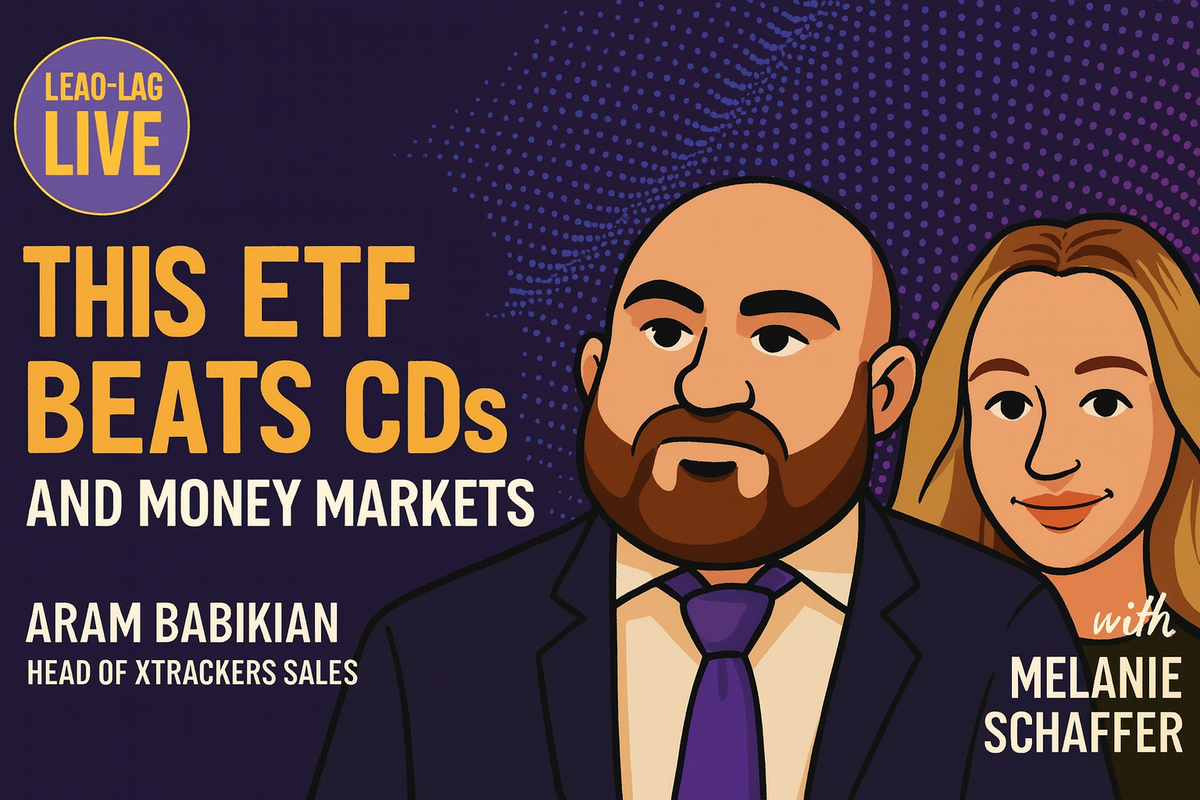
In a recent Lead-Lag Live Deep Dive, host Melanie Schaffer sat down with Aram Babikian of Xtrackers to unpack how investors are rethinking short-term capital and where the Xtrackers U.S. Treasury 0–1 Year ETF (TRSY) fits into today’s yield landscape.
What Problem Is TRSY Designed to Solve?
At its core, TRSY is built to function as a modern cash-management tool. It provides exposure to U.S. Treasury bills with maturities between zero and one year, wrapped in an ETF structure that trades intraday like a stock.
That matters because many traditional cash vehicles come with trade-offs. Certificates of deposit can lock up capital. Money market funds may limit flexibility. Ultra-short bond funds often introduce credit exposure. TRSY is designed to sit in that gap, offering investors a way to keep capital liquid while earning income tied directly to Treasuries.
Liquidity When It Actually Matters
One of the standout advantages discussed in the conversation was liquidity. Unlike CDs, which often penalize early withdrawals, TRSY can be bought or sold throughout the trading day. More importantly, the underlying instruments—U.S. Treasuries—are among the most liquid securities in the world.
In periods of market stress or sudden opportunity, that flexibility can be meaningful. Investors who want to redeploy cash quickly do not have to wait for maturities or accept withdrawal penalties to do so.
Cost, Structure, and Risk Considerations
TRSY also stands out for its low expense ratio, particularly when compared with many money market funds and ultra-short bond ETFs that have become more expensive as yields have risen.
Structurally, the fund sticks strictly to Treasuries. That means no corporate bonds, no asset-backed securities, and no embedded credit risk. Duration is intentionally short, which helps mute interest-rate sensitivity relative to longer-dated bond funds.
Unlike money market funds with stable net asset values, TRSY’s price can fluctuate. That introduces the potential for modest appreciation or depreciation, but the short maturity profile helps limit volatility over time.
A Note on Taxes
Another important point raised in the discussion is taxation. Because TRSY holds U.S. Treasuries, the income generated may be exempt from state and local income taxes, which can be especially relevant for investors in high-tax states. As always, investors should consult a tax professional to understand how this applies to their specific situation.
Where TRSY Fits
TRSY is not designed to replace every cash or income vehicle. Instead, it offers an alternative for investors who want:
- Daily liquidity
- Exposure limited to Treasuries
- Competitive pricing
- A transparent, ETF-based structure
In that sense, it can serve as a bridge between traditional cash holdings and riskier income strategies, particularly in a market environment where flexibility matters.
As always, this discussion is for educational purposes and not investment advice.
Lead-Lag Live is part of The Lead-Lag Report, where we spotlight conversations that cut through the noise — separating market fantasy from fundamental truth.
DISCLAIMER – PLEASE READ: This is a sponsored episode for which Lead-Lag Publishing, LLC has been paid a fee. Lead-Lag Publishing, LLC does not guarantee the accuracy or completeness of the information provided in the episode or make any representation as to its quality. All statements and expressions provided in this episode are the sole opinion of Xtrackers By DWS and Lead-Lag Publishing, LLC expressly disclaims any responsibility for action taken in connection with the information provided in the discussion. The content in this program is for informational purposes only. You should not construe any information or other material as investment, financial, tax, or other advice. The views expressed by the participants are solely their own. A participant may have taken or recommended any investment position discussed, but may close such position or alter its recommendation at any time without notice. Nothing contained in this program constitutes a solicitation, recommendation, endorsement, or offer to buy or sell any securities or other financial instruments in any jurisdiction. Please consult your own investment or financial advisor for advice related to all investment decisions.