The Fed Is Not Fighting Inflation. It Is Fighting the Gas Pump.
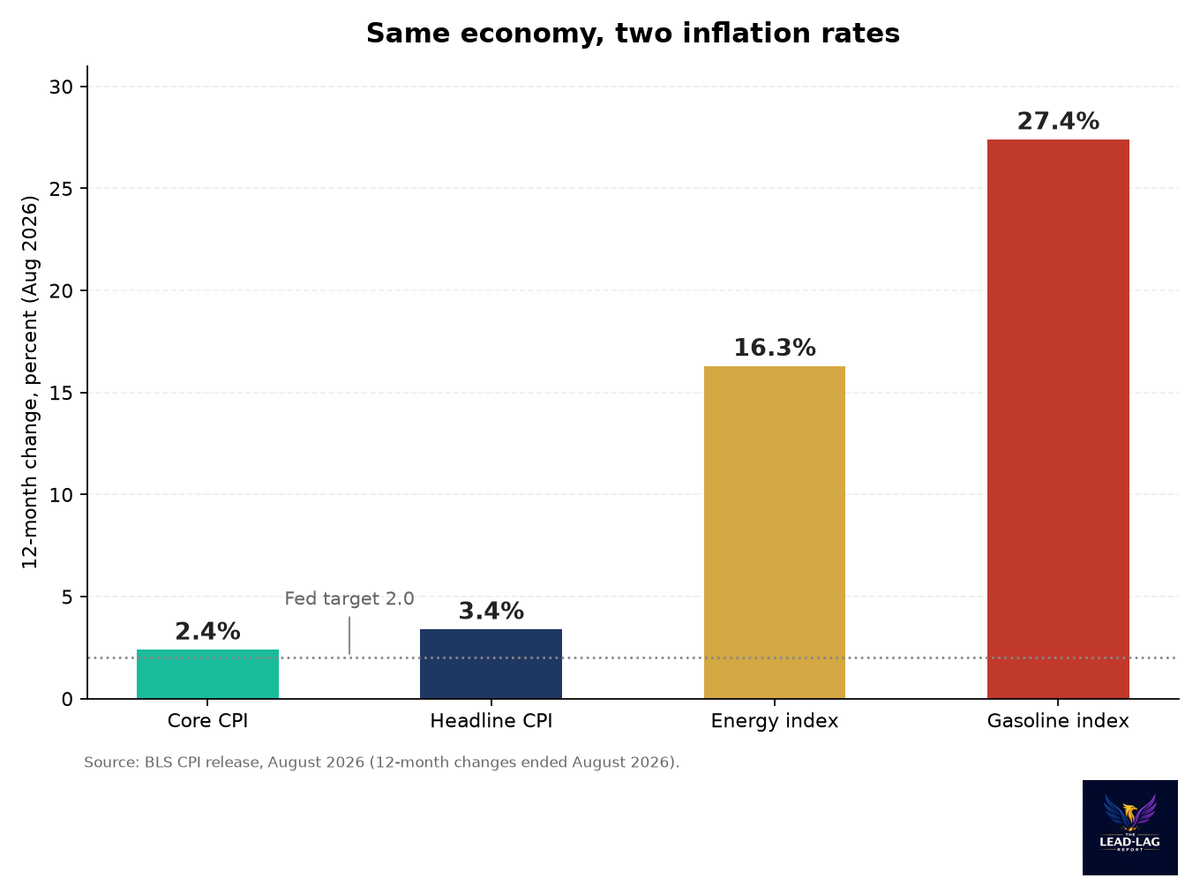
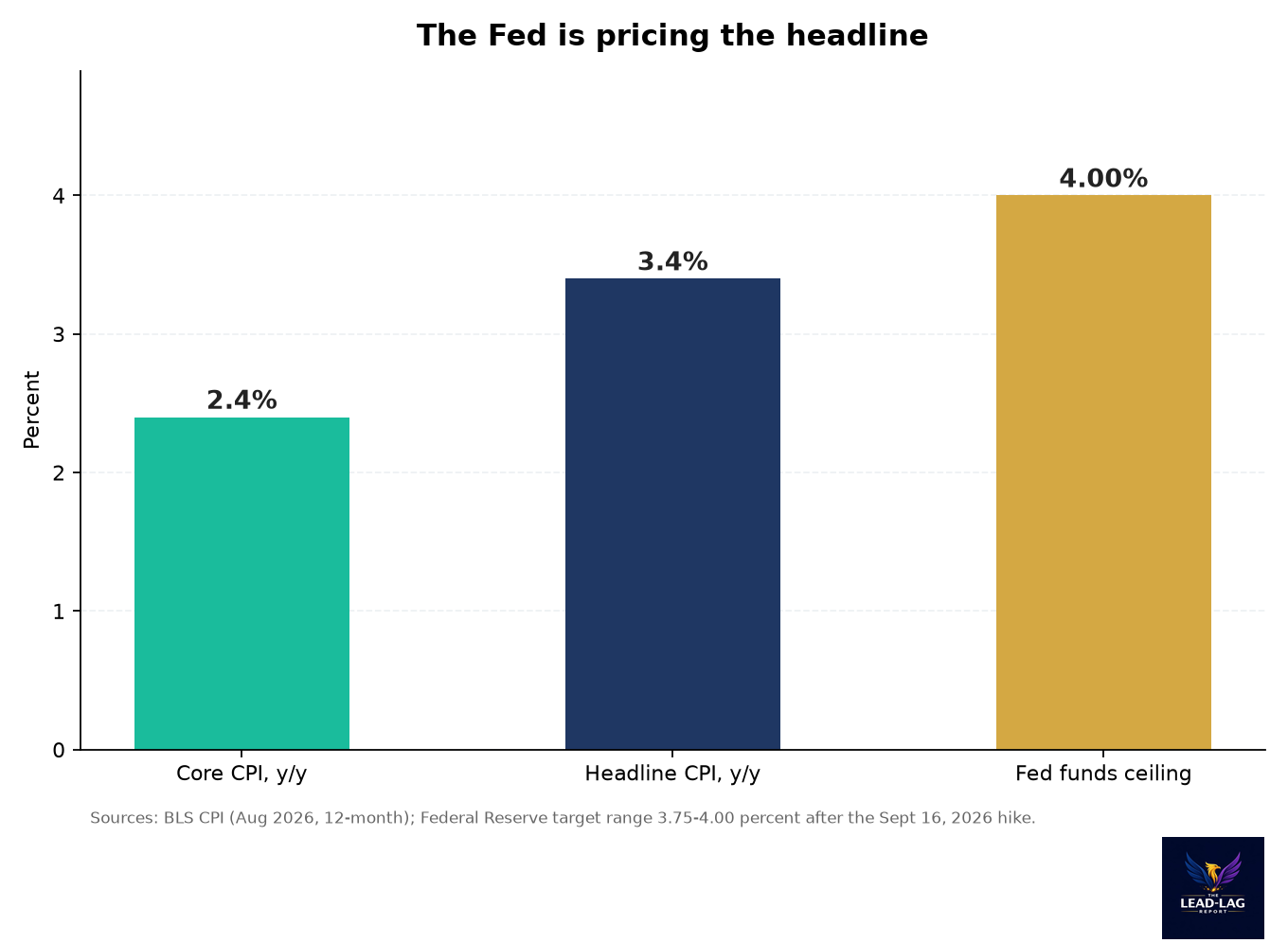
Core CPI sits at 2.4 percent, essentially at target. The headline gap is gasoline, up 27.4 percent on the year and over a third of August's entire monthly increase. The Fed hiked into it anyway.

Today's Lead-Lag Report post is sponsored by GraniteShares

MULL seeks 2x (200%) the daily percentage change of Micron Technology, Inc. (MU), via swap-based exposure, single-ticker, single-day. A 2x-magnified expression of a directional view on MU, without options.
Daily reset. Not a buy-and-hold investment. Intended for active traders holding for very short periods, often a single trading day. Investors could lose the full value of their investment within a single day. Please read the prospectus.
Book a walk-through with GraniteShares
Fund page + prospectus
This material must be preceded or accompanied by a Prospectus. Investment in the Fund involves risk, including possible loss of principal. Not suitable for all investors; daily reset; short-holding-period tool.
The Fund is distributed by ALPS Distributors, Inc. GraniteShares is not affiliated with ALPS Distributors, Inc.
SSC Approval ID: GRS002578
DISCLAIMER – PLEASE READ: This is sponsored advertising content for which Lead-Lag Publishing, LLC has been paid a fee. The information provided in the link is solely the creation of GraniteShares. Lead-Lag Publishing, LLC does not guarantee the accuracy or completeness of the information provided in the link or make any representation as to its quality. All statements and expressions provided in the link are the sole opinion of GraniteShares, and Lead-Lag Publishing, LLC expressly disclaims any responsibility for action taken in connection with the information provided in the link.
The Fed hiked into an oil shock to fight a number the economy is barely producing.
By Michael A. Gayed, CFA · October 1, 2026
Key Highlights
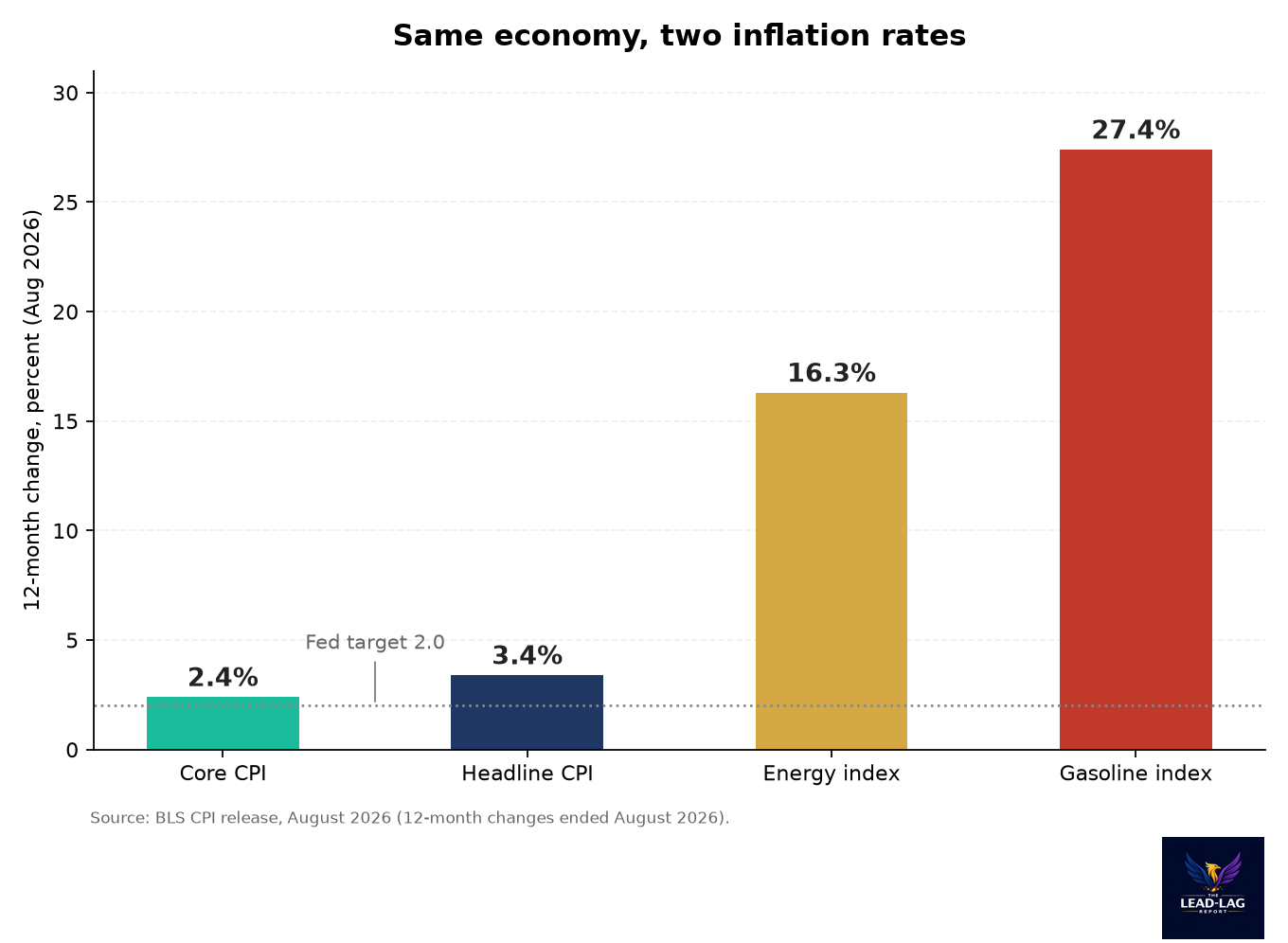
August CPI printed 3.4 percent year over year, but core CPI, the part the Fed can actually influence, sits at 2.4 percent, a full point from the headline and a whisker above target.
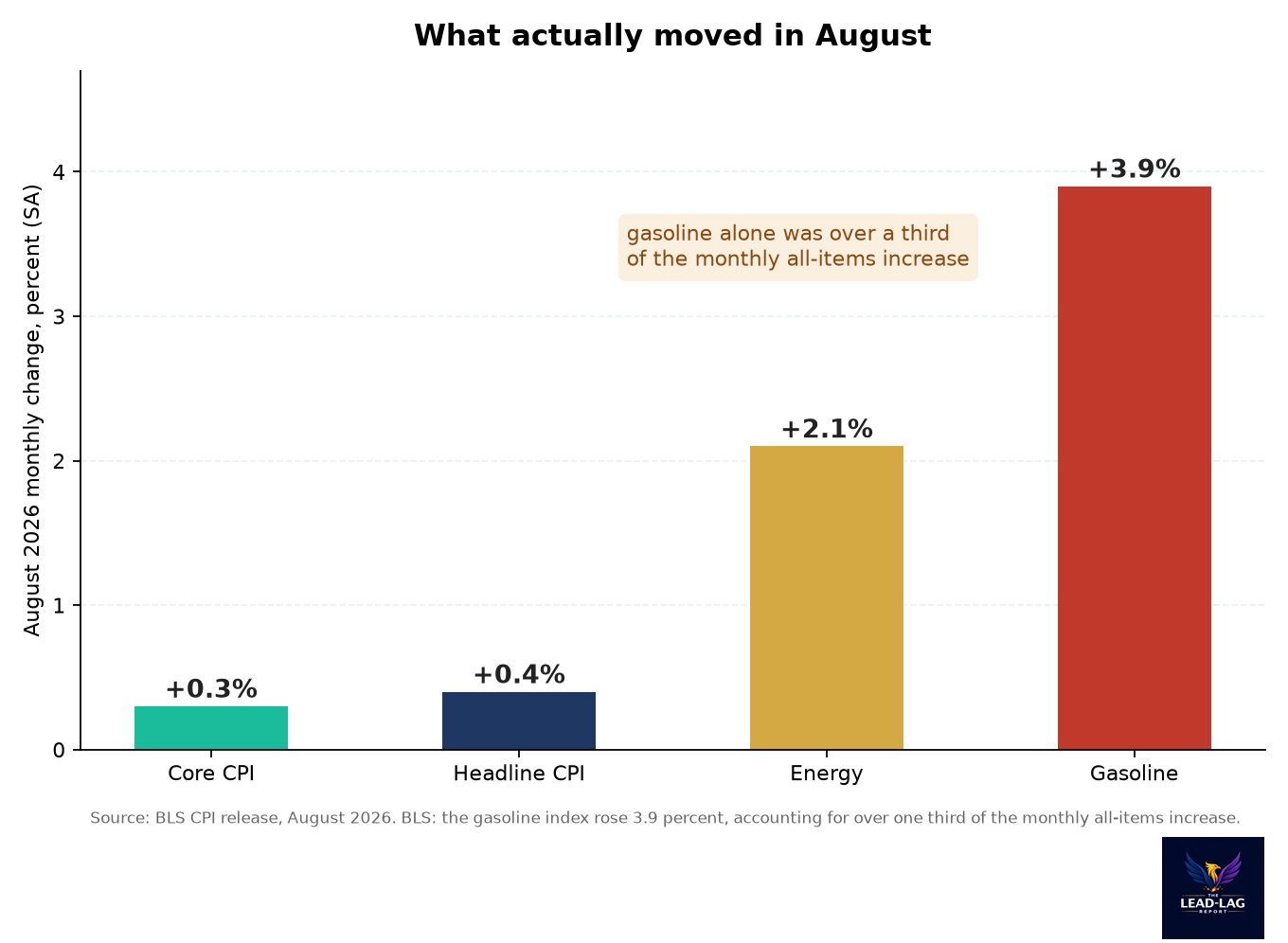
The gap is almost entirely the pump: energy is up 16.3 percent on the year and gasoline 27.4 percent. In August alone, gasoline rose 3.9 percent in one month and, in the BLS's own words, accounted for over one third of the entire monthly all-items increase.
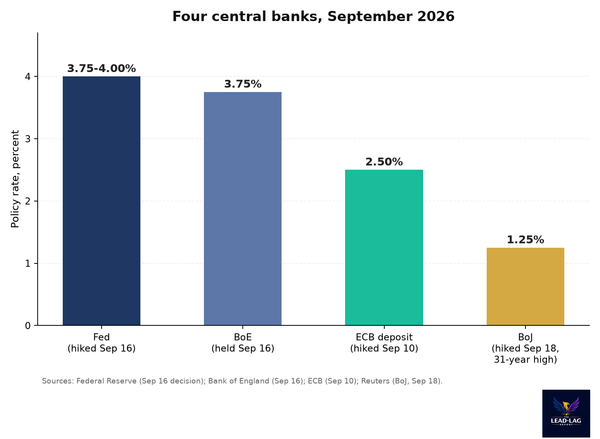
The Fed raised rates on September 16 anyway, to 3.75 to 4.00 percent, its first hike in three years. It is tightening against a supply shock it cannot print away and cannot damp with demand policy.
The setup
Strip the energy out of the August inflation report and the United States has essentially arrived. Core CPI ran 2.4 percent year over year and 0.3 percent on the month. Headline CPI printed 3.4 percent year over year and 0.4 percent on the month, up from July's muted 0.1 percent. The entire difference between a Federal Reserve that is done and a Federal Reserve that hiked on September 16 for the first time in three years, to a range of 3.75 to 4.00 percent, is a supply shock in crude oil and its refined products.
This is the oldest mistake in monetary policy, and it is being made in real time. A central bank cannot produce barrels. When headline inflation is driven by a physical supply loss, rate hikes suppress the demand side of an economy whose core price pressure is already at target, while the energy line keeps climbing regardless. The cure arrives by pipeline, not by policy rate.
What the shock actually looks like
The energy shock has rebuilt itself twice. The March war shock cut global oil supply by 10.1 million barrels a day, and prices later settled into a $90 to $100 range as markets adjusted. Then in early July the Strait of Hormuz was effectively closed again, and exports on bypass routes fell another 2.1 million barrels a day to 15 million. Brent finished September at $113.96, well above the range the market had learned to live with.
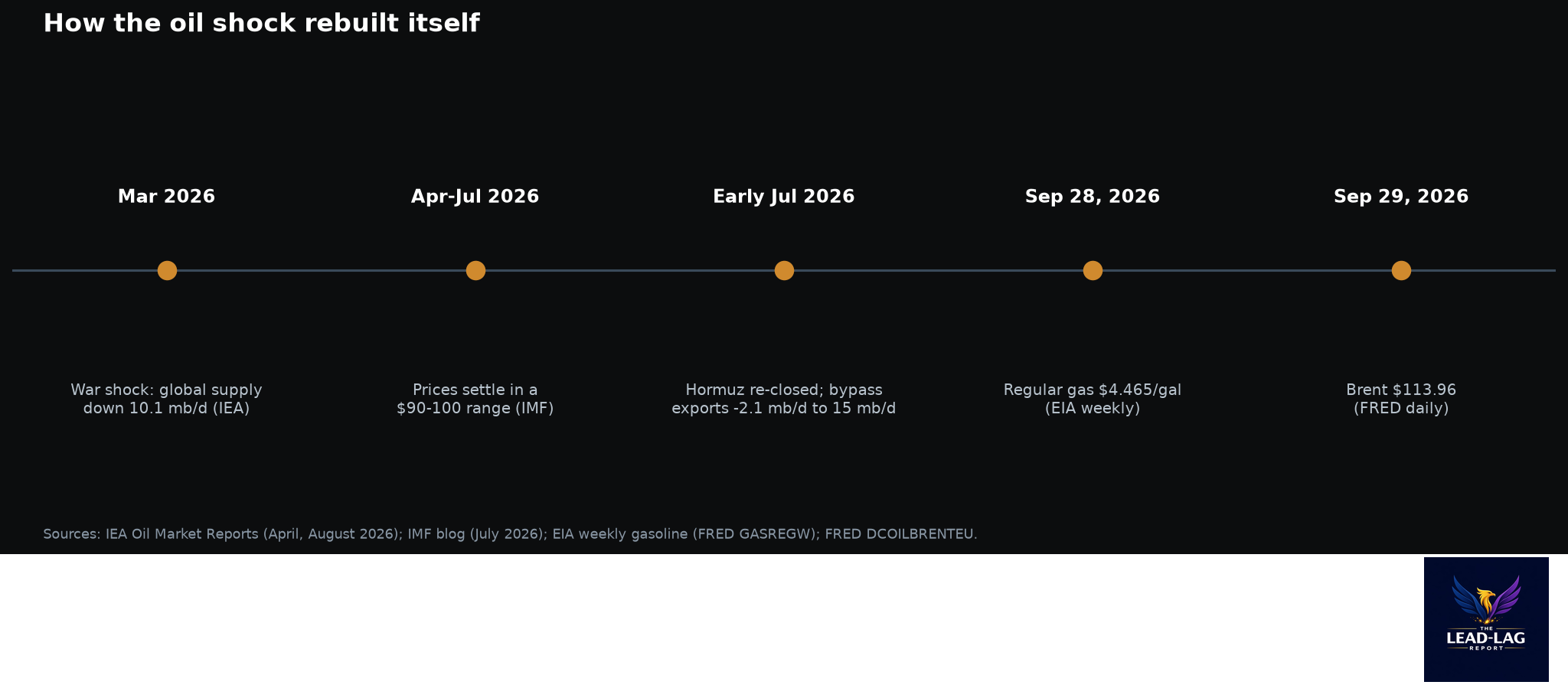
The pump is where it surfaces. Regular gasoline averaged $4.465 a gallon in the week ended September 28 per EIA data, with AAA reporting the national average still climbing, up nearly five cents in a single week. Gasoline is the one price every consumer reads daily, which is precisely why it matters beyond its weight in the basket: it is the channel through which a supply shock becomes an expectations problem.
The arithmetic the Fed is fighting
Here is the decomposition that should frame Friday and every meeting after it. On a 12-month basis: core 2.4, headline 3.4, energy 16.3, gasoline 27.4. On the month: core 0.3, headline 0.4, energy 2.1, gasoline 3.9, with the BLS stating plainly that gasoline accounted for over a third of the monthly increase. The Fed's tightening is aimed at the 1.0-point gap between headline and core, and that gap is a pump, not a wage spiral.
The part nobody prices
The reflex case for the Fed is insurance: hike now so the shock never reaches core, because expectations are the one thing monetary policy can defend. That case is respectable, and it is exactly what the September 16 hike was. But notice what it concedes: the Fed is spending real demand to insure against a phantom, tightening into an economy where the underlying inflation rate has closed to within half a point of target. Every 25 basis points spent on headline insurance is a real cost imposed on the part of the economy that is already behaving.
The asymmetry cuts the other way too. If Hormuz reopens or the bypass routes rebuild, energy base effects roll over and the headline gap closes on its own, leaving the Fed visibly tighter than it needs to be against a 2.4 percent core. If the closure hardens instead, no plausible demand policy closes a physical supply gap, and the Fed will have spent its credibility tightening against a number it cannot move. That is the bind, and Friday's payrolls, expected around 95,000 to 100,000 by forecasters, arrive with the market watching whether the demand side is being sacrificed for the pump's sins.
What to watch
Three checkpoints settle this. First, Friday's September employment report at 8:30 AM ET: a soft print strengthens the case that the hike landed on demand the economy was not spending anyway. Second, the next EIA weekly gasoline prints: $4.465 is already the highest of this move, and the pass-through into inflation expectations is the actual threat the Fed is defending against. Third, whether core stays near 2.4 in the September CPI: the moment energy stops being the marginal driver, the entire rationale for the September hike becomes a testable counterfactual.
The takeaway is not that inflation is over. It is that the inflation the Fed can fight is basically at target, and the inflation it is fighting is in a commodity it cannot print. When a central bank tightens against a supply shock, it is choosing to slow the economy to buy insurance against its own fear of expectations. That trade has a name, and it is not price stability. Few understand this.
The Lead-Lag Report is provided by Lead-Lag Publishing, LLC. All opinions and views mentioned in this report constitute our judgments as of the date of writing and are subject to change at any time. Information within this material is not intended to be used as a primary basis for investment decisions and should also not be construed as advice meeting the particular investment needs of any individual investor. Trading signals produced by the Lead-Lag Report are independent of other services provided by Lead-Lag Publishing, LLC or its affiliates, and positioning of accounts under their management may differ. Please remember that investing involves risk, including loss of principal, and past performance may not be indicative of future results. Lead-Lag Publishing, LLC, its members, officers, directors and employees expressly disclaim all liability in respect to actions taken based on any or all of the information on this writing.