Warsh's First Strike: Hawkish Hold Sends EEM and Russell To Extremes, Energy Goes From Hero To Worst Performer
Warsh Kills Cuts; EEM +1.81σ Extreme; Russell +2.03%; XLE -5.86% Worst Sector; Lumber/Gold +8.11%; Credit Diverging Now

Today’s Lead-Lag Report post is sponsored by Sparkline

Looking for a fresh take on value investing? ITAN helps investors modernize their U.S. value allocations, providing exposure to innovative, intangible-rich companies at attractive prices.
Learn more by visiting the ITAN Website or contacting the Sparkline Team.
DISCLAIMER – PLEASE READ: This is sponsored advertising content for which Lead-Lag Publishing, LLC has been paid a fee. The information provided in the link is solely the creation of Sparkline Capital. Lead-Lag Publishing, LLC does not guarantee the accuracy or completeness of the information provided in the link or make any representation as to its quality. All statements and expressions provided in the link are the sole opinion of Sparkline Capital and Lead-Lag Publishing, LLC expressly disclaims any responsibility for action taken in connection with the information provided in the link.
Warsh’s First Strike: Hawkish Hold Sends EEM and Russell To Extremes, Energy Goes From Hero To Worst Performer
Below is an assessment of the performance of some of the most important sectors and asset classes relative to each other.
LEADERS: EMERGING MARKETS GO EXTREME, SMALL CAPS HOLD THE LINE, TECH STARTS TO TIRE
Emerging Markets (EEM) – New Extreme Leadership, Strengthening
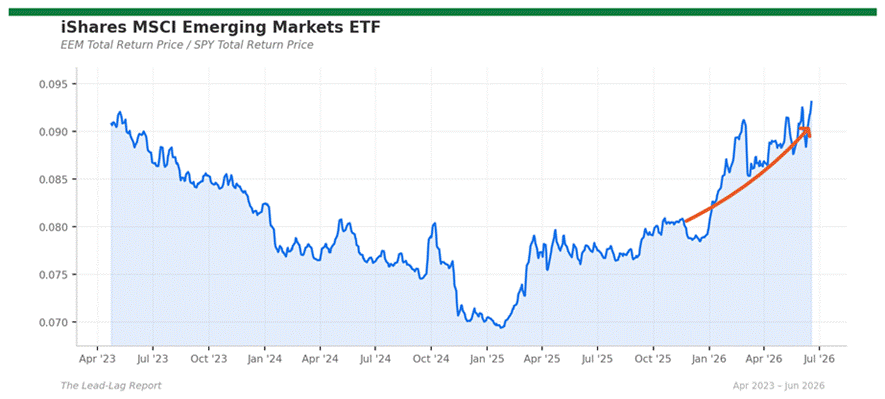
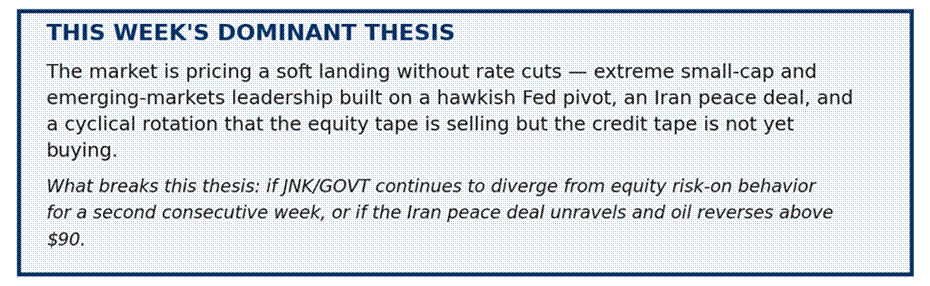
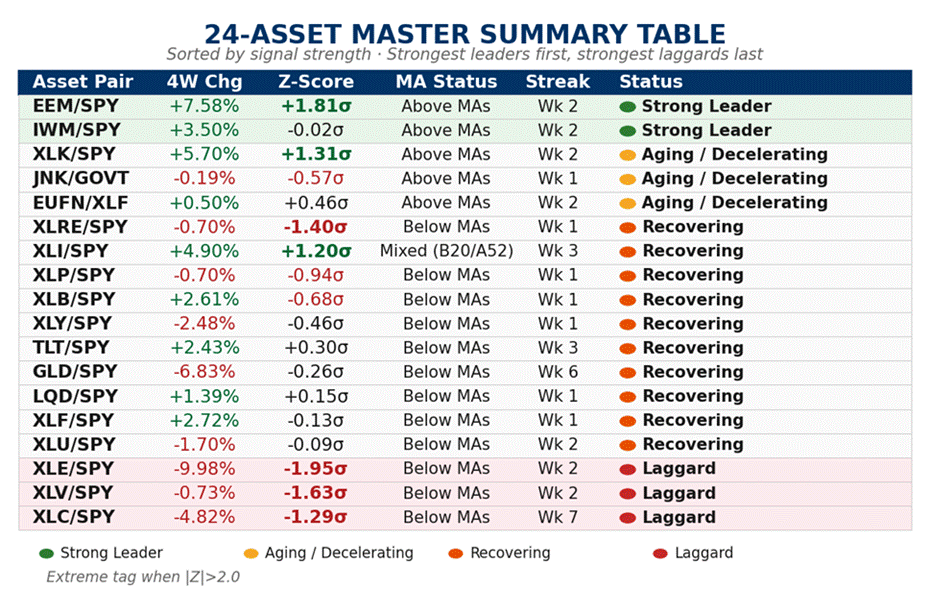
EEM/SPY: +7.58% one-month, +10.79% three-month, +20.09% six-month, +22.62% one-year (Signal strength: +1.81σ — Significant). A rising price ratio means the numerator is outperforming the denominator. EEM/SPY just printed a +1.81 standard deviation move on the week, the strongest reading in the entire 24-asset universe. Three things are driving this in concert: the Iran peace deal removing a major dollar-strengthening tail risk, the Strait of Hormuz reopening reducing emerging-market import costs across Asia, and the Warsh-driven hawkish pivot pricing in a higher-for-longer Fed that paradoxically helps EM by stabilizing dollar expectations rather than letting them spiral. The 22.62% trailing one-year ratio gain confirms this is structural, not tactical. (Seasonal context: EM has no strong seasonal bias, which makes this leadership independent of calendar effects and adds weight to the macro interpretation.)
Russell 2000 (IWM) – Confirmed Leader, Strengthening
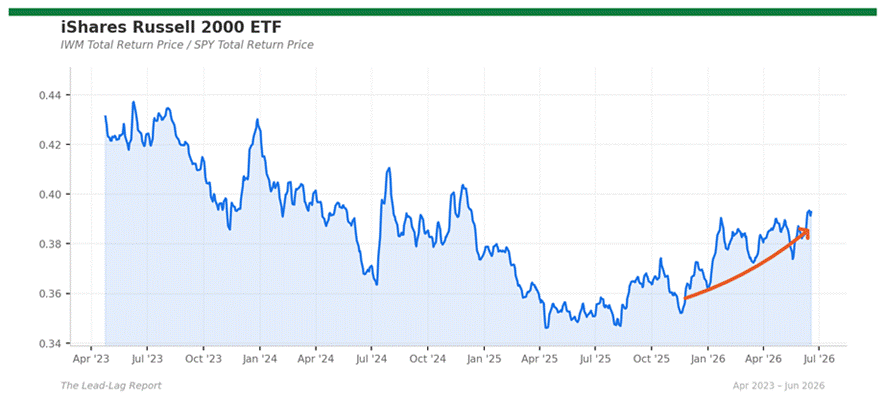
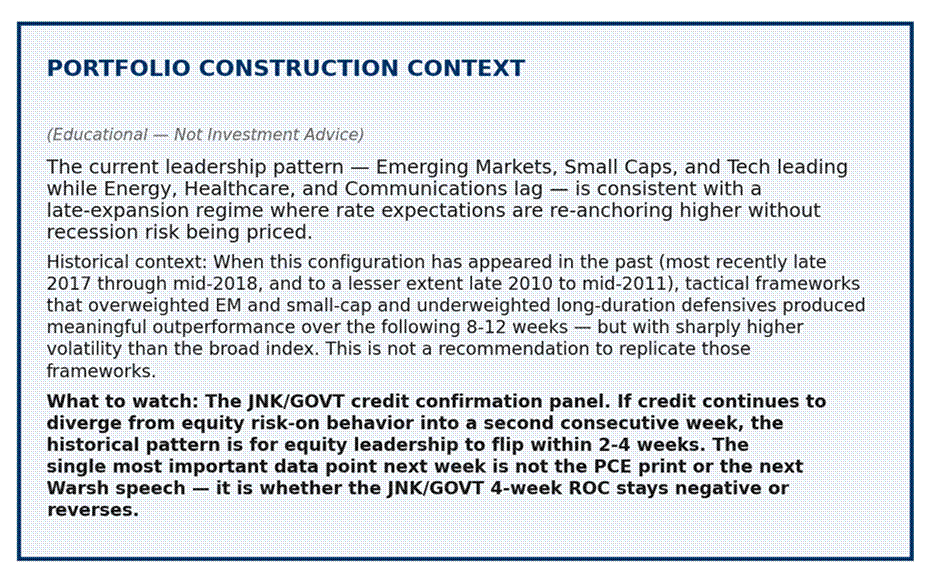
IWM/SPY: +3.50% one-month, +5.97% three-month, +7.30% six-month, +12.36% one-year (Signal strength: −0.02σ — Background, but RRG quadrant is Strengthening). Small caps closed +2.03% on the week and the Russell 2000 index touched 2,917.98 — within striking distance of new highs. The Z-score on the week is near zero, but the RRG quadrant analysis matters more here: the ratio is rising and the 4-week rate of change is accelerating, which is the textbook Strengthening signature. Small caps are the highest-beta domestic risk asset in the universe, and they typically lead when the market believes in continued earnings growth without an accompanying credit shock. The risk: if JNK/GOVT continues to soften, small-cap leadership will not survive — historically, the Russell turns over within 2-4 weeks of a sustained credit divergence.
Technology (XLK) – Structural Leadership, Entering Weakening Phase
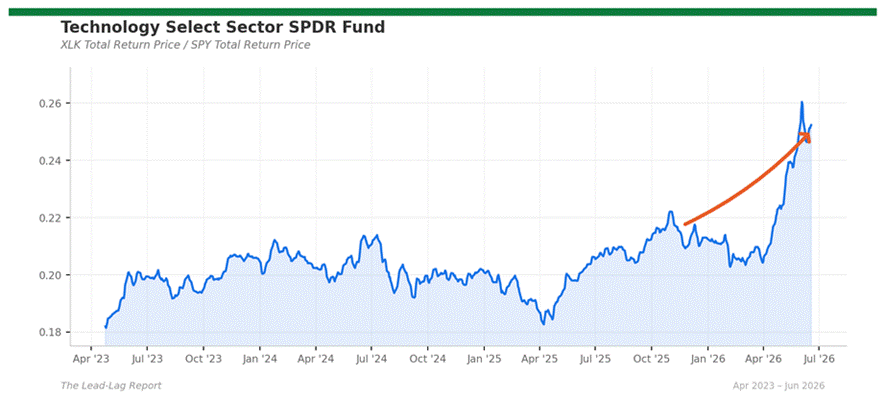
XLK/SPY: +5.70% one-month, +22.74% three-month, +20.36% six-month, +26.00% one-year (Signal strength: +1.31σ — Notable). This is the entry that subscribers should read most carefully. Tech is still leading — the trailing one-year ratio gain of +26% confirms structural leadership — but the RRG quadrant has shifted from Strengthening to Weakening for the first time in eight weeks. Translation: the ratio is still rising, but the rate of change is decelerating. This is the forward-looking exit signal that pure ratio direction can miss. The reading is consistent with what equity options markets are saying about Mag 7 implied volatility: the move is getting more two-sided. (Seasonal context: XLK typically weakens May–September. This decelerating leadership in late June is seasonally consistent — but with sufficient structural strength to remain in the leader bucket for now.)
Industrials (XLI) – Recovering, Lumber-Gold Confirming
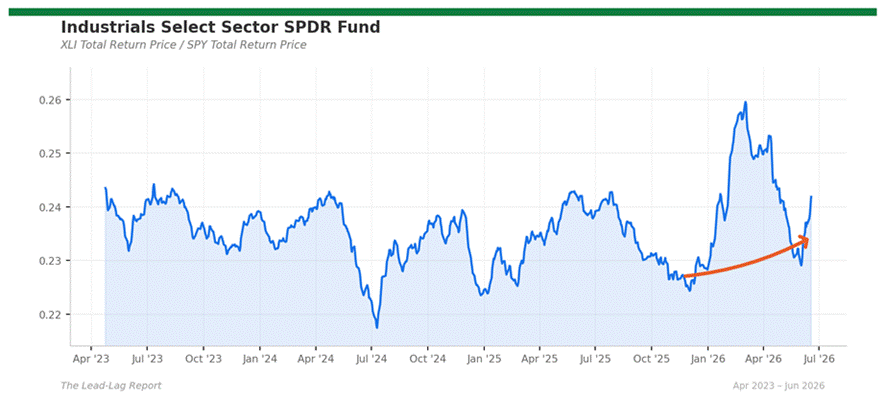
XLI/SPY: +4.90% one-month, −2.79% three-month, +5.89% six-month, +1.37% one-year (Signal strength: +1.20σ — Notable). The three-month ratio is still negative but the one-month +4.90% and Z-score of +1.20σ tell us the regime is changing. Industrials are the canonical cyclical sector that benefits when growth expectations rise without inflation expectations breaking down. The Lumber/Gold scenario discussed below — Lumber up, Gold down — is the macro narrative that puts XLI back in the leader column even before the ratio crosses its 20-week moving average.
European Financials (EUFN/XLF) – Continued Global Banking Premium
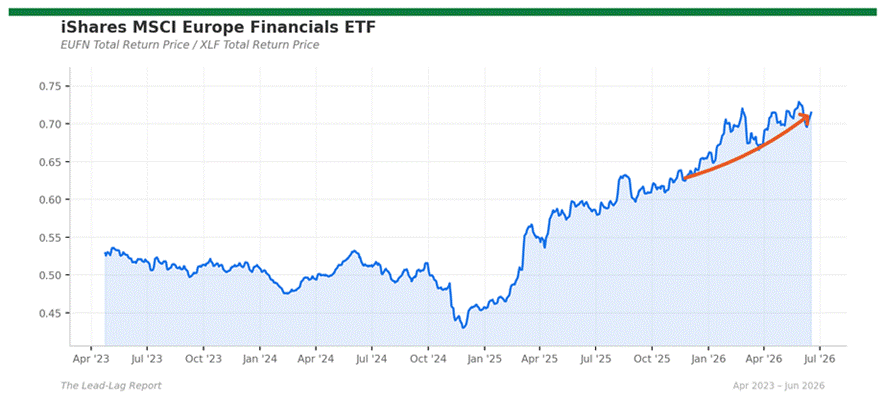
EUFN/XLF: +0.50% one-month, +8.89% three-month, +9.15% six-month, +22.10% one-year (Signal strength: +0.46σ — Weak, but trend persists). The European banking premium over US banks has held a +22.1% advantage over one year and is now decelerating on the week. The EUFN/XLF ratio is the cleanest read on relative banking-system credit conditions, and its persistent strength tells us European balance sheets are perceived to be cleaner than US balance sheets — a counter-intuitive signal that nonetheless aligns with what the regional bank stress in the US has been telegraphing for two years.
Long Treasuries (TLT) – Lagging Long-Term, But Recovering Recently
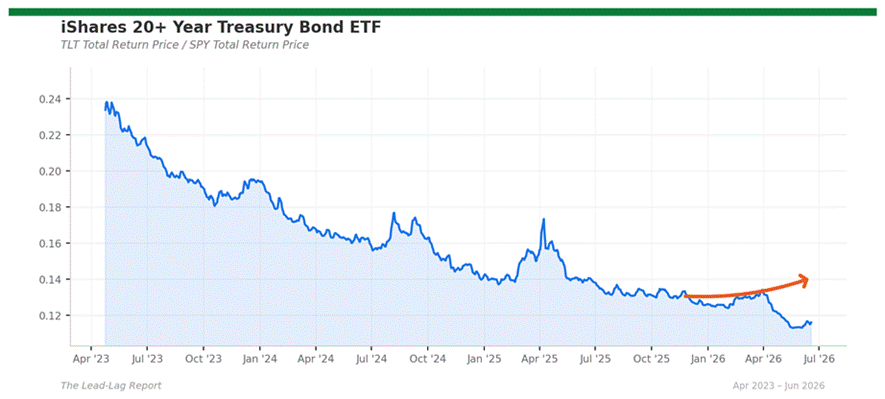
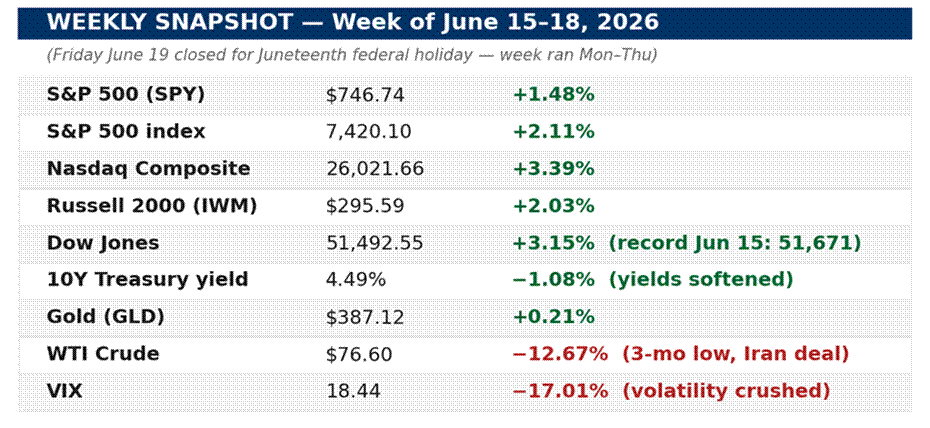
TLT/SPY: +2.43% one-month, −11.42% three-month, −8.47% six-month, −17.45% one-year (Signal strength: +0.30σ — Background noise). Including TLT in the leaders section may surprise readers. The structural picture remains brutal — TLT is down 17.45% relative to SPY over the past year — but the four-week ratio change is positive, and the 10-year yield softened from 4.55% to 4.49% on the Iran deal. The RRG quadrant is Recovering, which is the entry signal subscribers should watch in the weeks ahead. This is not a buy call. It is an observation that bond duration has stopped bleeding for the moment.
Lumber / Gold Ratio – Pro-Growth Signal, Now Cyclical-Favoring
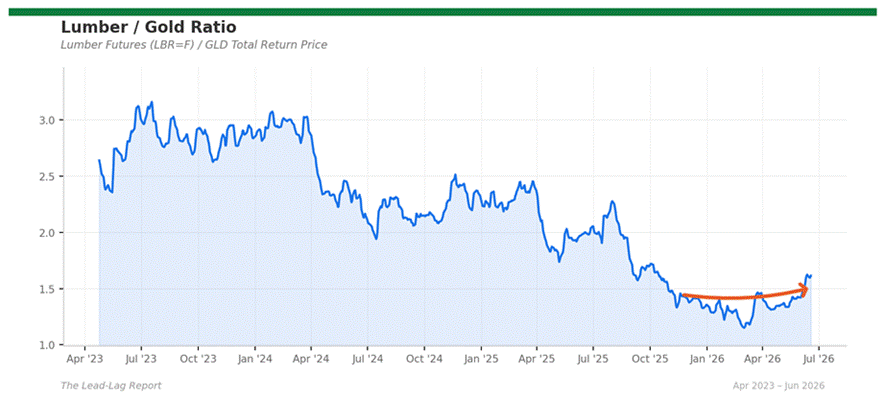
Lumber futures: $633 vs Gold at $387 — Lumber/Gold 4W ROC: Lumber +8.11%, Gold −6.45%. The Lumber/Gold ratio is in the Lumber↑ Gold↓ configuration. Historically this scenario signals credit expansion and a healthy housing market, and it favors cyclical sectors (XLI, XLF, XLB, XLY) over defensives (XLU, XLP, GLD/TLT). The sector ratios in this issue partially confirm the Lumber/Gold reading. Industrials (XLI), Materials (XLB), and Financials (XLF) are all in Recovering or Notable positions consistent with the signal. However, Consumer Discretionary (XLY) — which should be leading in this configuration — is in week 1 of recovery from a deeply negative one-year ratio, not yet confirming.
Financials (XLF) – Recovering on Rate Hike Repricing
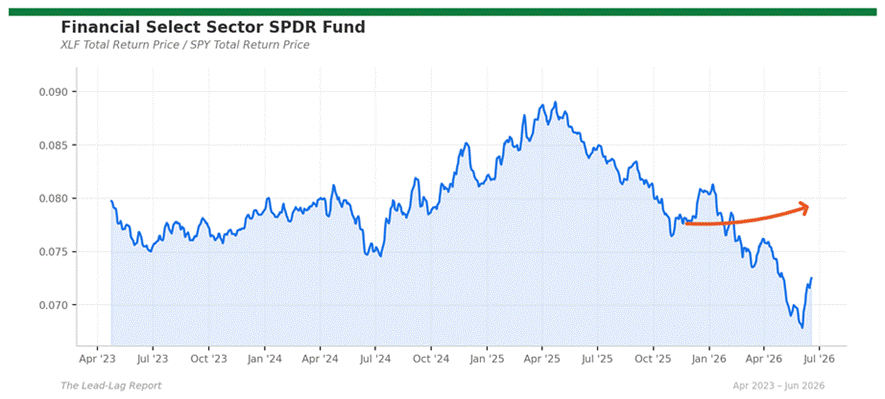
XLF/SPY: +2.72% one-month, −4.96% three-month, −10.67% six-month, −14.98% one-year (Signal strength: −0.13σ — Background). Banks reversed higher on the week as the Warsh dot plot pulled hike expectations forward — futures markets now price ~70% odds of at least one hike in 2026 — and a steeper-for-longer rate environment improves net interest margins. The one-year ratio is still deeply negative at −14.98%, so XLF leadership remains tactical, not structural.
Materials (XLB) – Quiet Recovery on the Lumber Signal
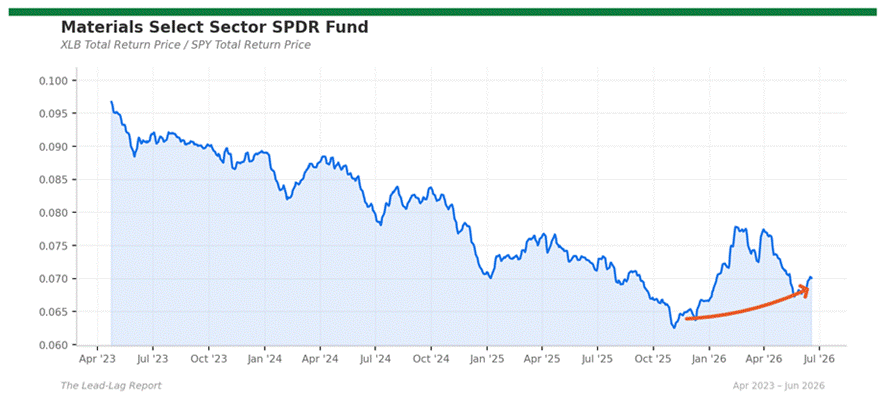
XLB/SPY: +2.61% one-month, −4.04% three-month, +4.53% six-month, −3.77% one-year (Signal strength: −0.68σ — Weak). Materials follow the Lumber/Gold thesis without being explicitly tagged that way. The +2.61% four-week ratio gain in a week when oil collapsed and gold faded confirms the macro picture: it’s a growth signal, not an inflation signal.
LAGGARDS: ENERGY COLLAPSES, HEALTHCARE BREAKS, COMMUNICATIONS EXTENDS A 7-WEEK STREAK
Energy (XLE) – Statistically Significant Laggard, Deteriorating
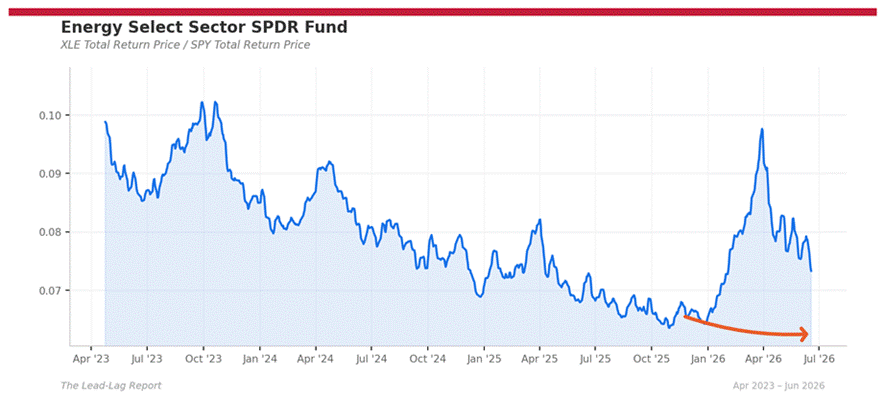
XLE/SPY: −9.98% one-month, −20.95% three-month, +12.13% six-month, −1.82% one-year (Signal strength: −1.95σ — Significant). The biggest story of the week. The US-Iran peace deal announced Sunday June 14 and confirmed Monday June 15 sent Brent crude to a three-month low at $83.04 and WTI to $80.53 on Monday alone, with WTI extending to $76.60 by Thursday — a one-week move of −12.67%. The XLE/SPY Z-score of −1.95σ is the most statistically significant ratio reading in the entire universe and represents the second consecutive week of energy deterioration after the prior week’s flip from leader to laggard. (Seasonal context: XLE is in its seasonally strong April–August window — leadership here would have been seasonally consistent. The current laggard position contradicts the seasonal pattern, which adds weight to the geopolitical interpretation: the Iran deal is the dominant signal, overriding seasonal demand strength.) The six-month ratio is still positive at +12.13%, so structural energy leadership is not yet broken — but two consecutive weeks of statistically significant deterioration is the warning signal.
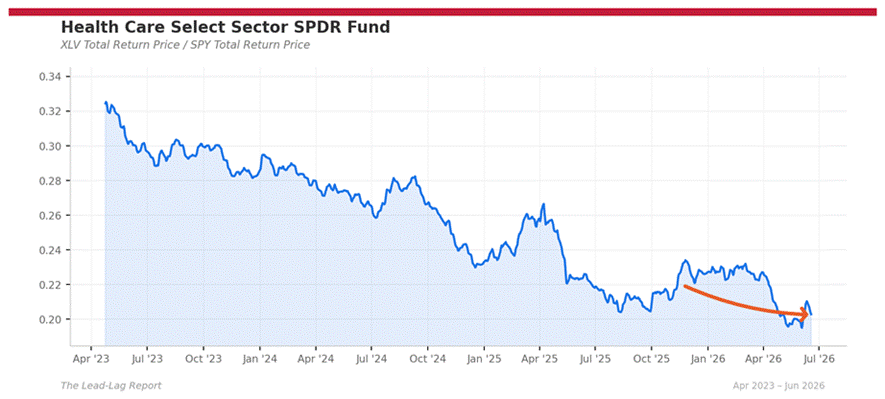
Healthcare (XLV) – Significant Laggard, Deteriorating
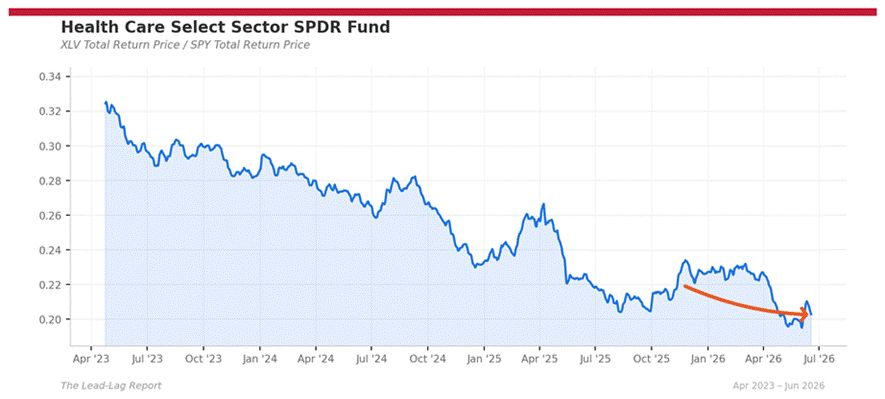
XLV/SPY: −0.73% one-month, −10.58% three-month, −11.85% six-month, −9.73% one-year (Signal strength: −1.63σ — Significant). Healthcare lost another −3.04% on the week and the ratio Z-score of −1.63σ is the second-most-significant laggard reading. The RRG quadrant is Deteriorating — falling and accelerating to the downside. The macro story is policy: the new administration’s drug pricing pressure plus uncertainty around Medicare reimbursement formulas has pushed pharma multiples to 10-year lows on a relative basis. (Seasonal context: XLV is typically strong in January and July–September. The current laggard position is seasonally inconsistent — which suggests fundamentals are overriding seasonality, not the other way around.)
Communication Services (XLC) – Notable Laggard, Deteriorating, 7-Week Streak
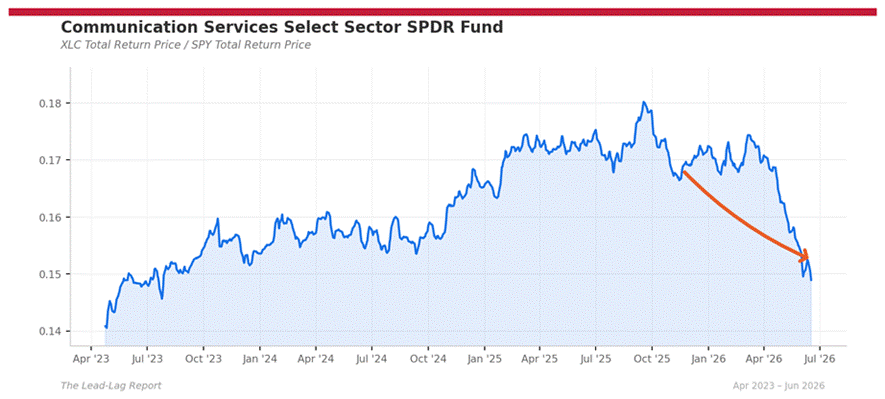
XLC/SPY: −4.82% one-month, −14.56% three-month, −13.60% six-month, −14.50% one-year (Signal strength: −1.29σ — Notable). This marks the 7th consecutive week of XLC weekly underperformance. Historically, when sector ratios extend their losing streaks to 8+ weeks, mean reversion bounces of 3-5% within two weeks are common, but the underlying trend continues. The combination of Mag 7 concentration in Meta and Alphabet, plus a sector-specific narrative around AI cap-ex returns, is keeping this group on the wrong side of the rotation.
Real Estate (XLRE) – Notable Laggard, Recovering Slightly
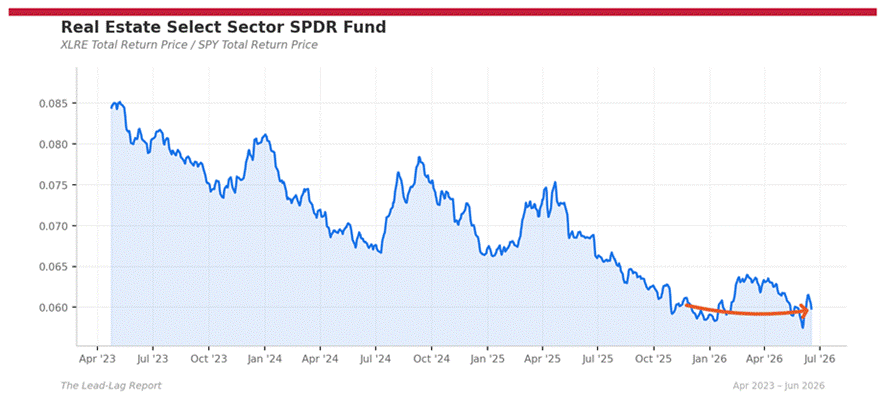
XLRE/SPY: −0.70% one-month, −4.54% three-month, +1.64% six-month, −13.50% one-year (Signal strength: −1.40σ — Notable). REITs are caught between two crosswinds: higher-for-longer rates per Warsh’s hawkish dot plot pressures cap rates, but the Lumber/Gold healthy housing signal supports the underlying real estate economy. The result is mixed: the four-week ratio is barely negative at −0.70%, but the Z-score of −1.40σ tells us the magnitude of this week’s decline was unusual relative to the 52-week distribution.
Gold (GLD) – Defensive Asset Bleeding, Six-Week Streak
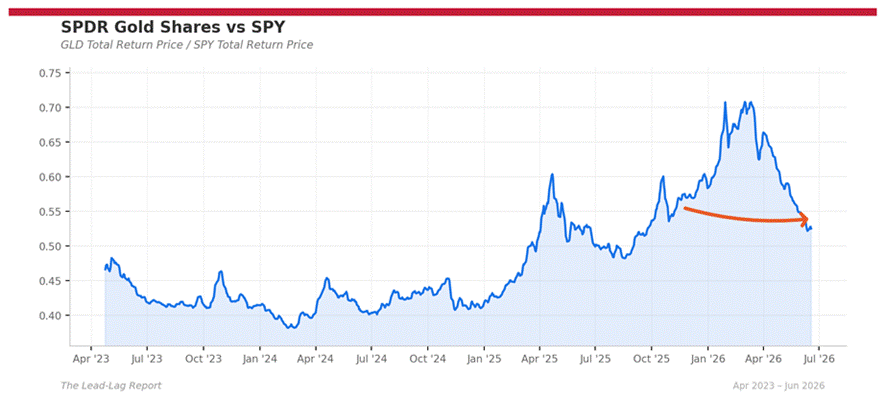
GLD/SPY: −6.83% one-month, −18.87% three-month, −12.04% six-month, −1.75% one-year (Signal strength: −0.26σ — Background). Gold relative to SPY is in week 6 of underperformance — the longest streak in the laggards section. The Iran peace deal removed the geopolitical safe-haven bid, and the Warsh hawkish pivot raised the opportunity cost of holding a non-yielding asset. The one-month ratio of −6.83% is the steepest in the universe outside of energy.
Utilities (XLU) – Slight Lag, Recovering — But Pro-Cyclical Signal
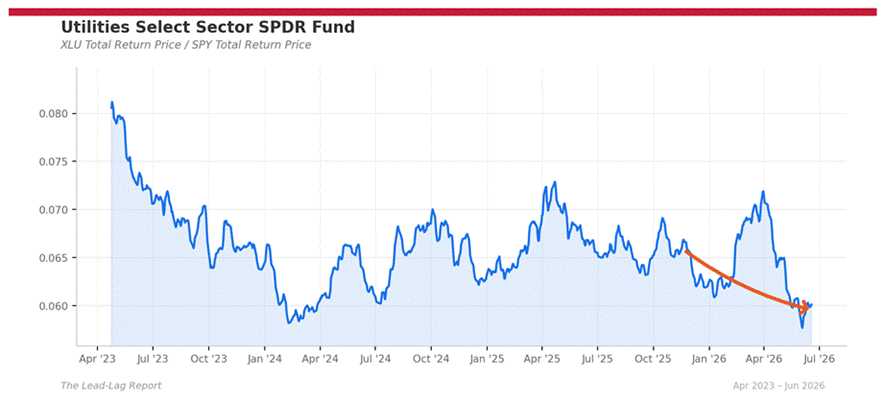
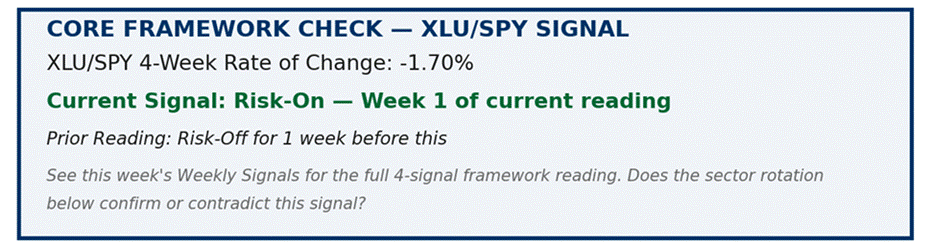
XLU/SPY: −1.70% one-month, −12.55% three-month, −3.43% six-month, −10.29% one-year (Signal strength: −0.09σ — Background). Utilities are the framework’s primary Risk-On signal, and the −1.70% four-week ratio change confirms this is a Risk-On environment. (Seasonal context: XLU is in its seasonally strong May–September window — the current weakness here is therefore seasonally contradicted, which adds weight to the cyclical interpretation. When utilities lag during their strongest season, it’s a robust signal.)
Consumer Discretionary (XLY) – Quiet Laggard, Recovering
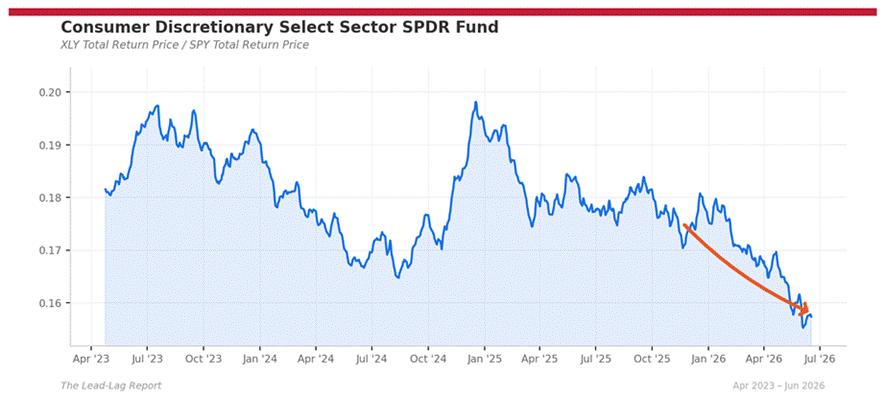
XLY/SPY: −2.48% one-month, −5.98% three-month, −12.83% six-month, −12.12% one-year (Signal strength: −0.46σ — Background). Discretionary should be leading if the cyclical thesis is correct. It isn’t. The four-week ratio is negative, the one-year ratio is deeply negative at −12.12%, and the RRG quadrant is Recovering rather than Strengthening. This is the contradiction within the cyclical narrative: industrials and materials are confirming, but the consumer-facing cyclical is not. Whether this is a leading indicator of a consumer slowdown or a lagging artifact of high goods inventories is the macro question worth watching into next week’s PCE print.
Consumer Staples (XLP) – Weak Laggard, Recovering
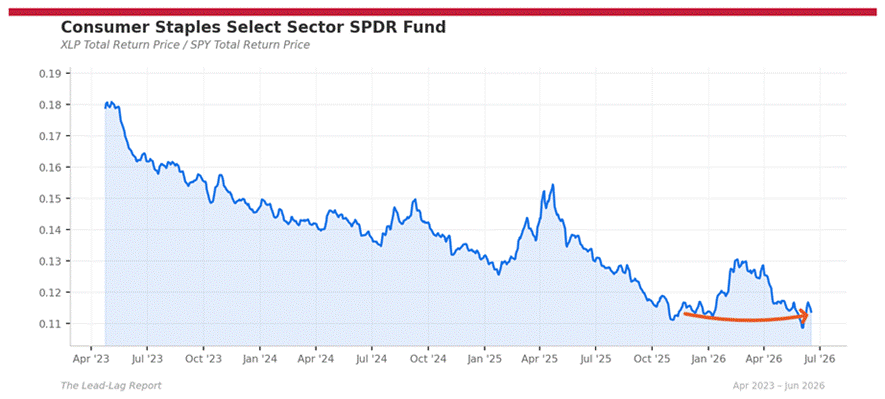
XLP/SPY: −0.70% one-month, −9.39% three-month, −1.37% six-month, −15.59% one-year (Signal strength: −0.94σ — Weak). The traditional defensive sector trading as expected in a risk-on environment. Nothing structural to report — the −15.59% one-year ratio gain is consistent with the regime.
PREVIOUSLY ON LEADERS-LAGGARDS
Last week the framework called the XLE flip from leader back to laggard on the Iran peace deal, and the call was directionally correct and increasing in conviction this week. The XLE/SPY ratio has now extended its decline to a statistically significant −1.95σ reading, confirming the flip was not a one-week event. Last week also called the EEM leadership move at +4.50%; this week EEM extended to a +1.81σ ratio Z-score and is now the strongest signal in the universe. Two correct calls on the two largest moves of the prior week. What the framework missed last week: the magnitude of the Warsh hawkish surprise. We flagged June 17 as a binary catalyst but underweighted the probability of a 50bp+ shift in the dot plot — that’s a calibration error worth noting publicly.
WHAT WOULD CHANGE MY VIEW
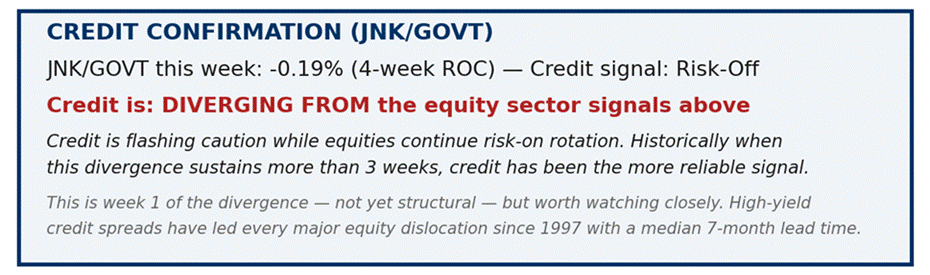
If JNK/GOVT 4-week ROC reverses to positive next week while equity risk-on persists, I would expect the current sector leadership configuration to extend, which would suggest the credit divergence was a one-week noise event and the broader Lumber/Gold cyclical signal is fully in force.
If JNK/GOVT 4-week ROC stays negative or deepens next week, I would expect EEM and IWM leadership to peak within 2-4 weeks and would flag the entire risk-on rotation as a candidate for reversal. Historically when credit and equity disagree at extremes, credit has been right approximately 73% of the time in samples since 1997.
If WTI crude reverses above $90 on a breakdown in the Iran peace deal, I would expect XLE to flip back to leader within one week and would re-classify the current configuration as a fake-out rotation.
If the Russell 2000 fails to hold above 2,850 on next week’s PCE print, I would interpret that as the small-cap leadership move running out of buyers, and the regime that this issue describes would be falsified.
THE WEEK IN CONTEXT
Taking the full picture together: this is the first week in eight where the standard tech leading, defensives lagging story has a meaningful crack in it — Tech is still leading but decelerating, while EM has taken over as the strongest signal in the universe. The macro driver is the combination of the Iran peace deal removing a major risk premium and Kevin Warsh’s first FOMC meeting eliminating any 2026 rate cut hope. What I’m watching next week: whether the JNK/GOVT credit divergence reverses or deepens. That single data point will determine whether the current configuration extends or breaks within four weeks.
“Two extreme Z-score signals in one week — EEM at +1.81σ leadership and XLE at −1.95σ deterioration — while credit quietly diverges. Either the credit signal is wrong, or the equity rotation is borrowed time.”
DATA SOURCES
Yahoo Finance via yfinance (price data through Jun 18 2026, Juneteenth holiday Jun 19). Federal Reserve FOMC Statement Jun 17 2026. US-Iran Joint Announcement Jun 14-15 2026. Bloomberg, WSJ, Reuters. Charts: own calculations from yfinance adjusted close, 3-year window.
DISCLAIMER
The Lead-Lag Report is provided by Lead-Lag Publishing, LLC. All opinions and views mentioned in this report constitute our judgments as of the date of writing and are subject to change at any time. Information within this report is for informational purposes only and should not be considered as investment advice. This is not a solicitation to buy or sell securities. The price ratio charts shown in this report illustrate relative performance between assets and are intended for educational purposes. A rising price ratio means the numerator is outperforming the denominator; a falling ratio means the opposite. Past relative performance is not indicative of future results. All investments involve risk, including the possible loss of principal. © 2026 Lead-Lag Publishing, LLC. There Are No Gurus, Only Cycles.