The Repricing Arrived. What The JOJO Signal Is Showing Now
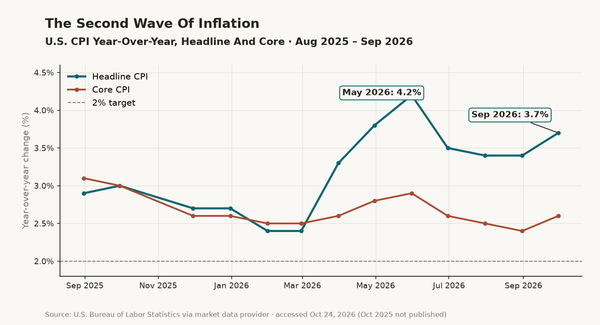
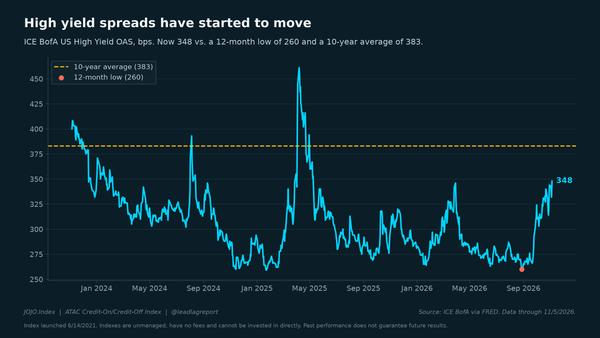
In July, the setup looked like the calm before a repricing. In October, the repricing arrived. Credit spreads widened by roughly 28 percent in a month, volatility spiked and bonds sold off across the curve. This piece looks at what moved, what the JOJO framework is designed to do in...

What Wider Spreads And A Flat Curve Say About Credit (JOJO)
KEY HIGHLIGHTS
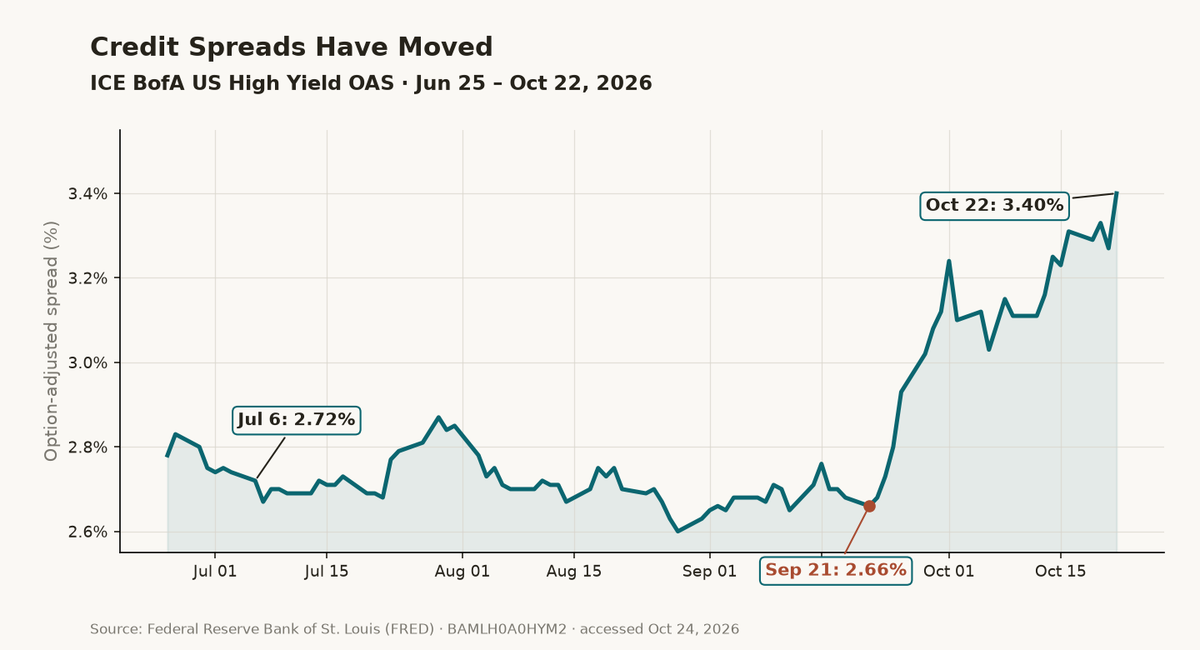
- The ICE BofA US High Yield Index Option-Adjusted Spread (OAS) reached 3.40% on 10/22/2026, up from 2.66% on 9/21/2026 and 2.72% on 7/6/2026.[1]
- The 10-year minus 2-year Treasury spread was +0.31% on 10/23/2026, after a low of +0.20% on 9/21/2026 and a high of +0.51% on 10/7/2026.[2]
- The 30-day SEC yield* on The ATAC Credit Rotation ETF (Ticker: JOJO) was 5.76% as of 9/30/2026.[3]
- As of 10/24/2026, the Fund’s published holdings were Treasury ETFs: 80.09% in iShares 20+ Year Treasury Bond ETF (TLT), 19.76% in iShares 7-10 Year Treasury Bond ETF (IEF) and 0.14% in cash and other.[3]
- Treasuries are not risk-free in a rate repricing: from 7/2/2026 through 10/23/2026, TLT fell 4.9% on a price basis, though it has recovered 5.0% from its 10/2/2026 weekly close.[4]
In July, the setup looked like the calm before a repricing. In October, the repricing arrived. Credit spreads widened by roughly 28 percent in a month, volatility spiked and bonds sold off across the curve. This piece looks at what moved, what the JOJO framework is designed to do in that kind of environment, and what a reader should and should not take from it.
WHAT MOVED
The ICE BofA US High Yield Index OAS closed at 2.66% on 9/21/2026, then reached 3.24% on 10/1/2026 and 3.40% on 10/22/2026.[1] The curve moved too: the 10-year minus 2-year Treasury spread fell to +0.20% on 9/21/2026, rose to +0.51% on 10/7/2026 and settled at +0.31% on 10/23/2026.[2]
That combination, wider credit spreads and a curve that steepened and then flattened again, is a messy picture. It is not a clean risk-off signal and it is not a clean all-clear. It is the kind of environment where simple rules based on one market give mixed answers.
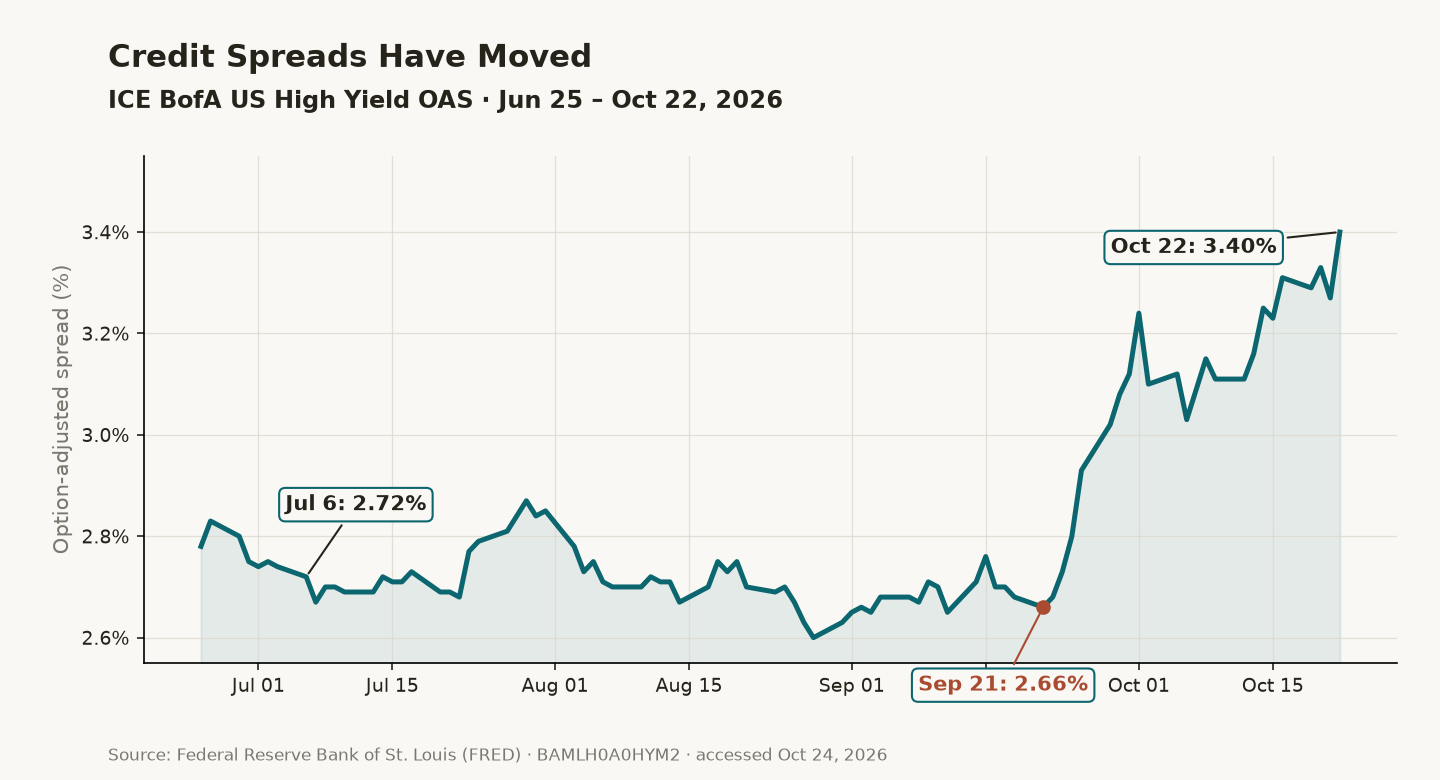
Chart 1: The ICE BofA US High Yield OAS, 6/25/2026 to 10/22/2026. Data as of: 10/22/2026
THE UTILITIES SIGNAL
The ATAC Credit Rotation ETF (JOJO) methodology emphasizes one relationship in particular: Utilities relative to the broader S&P 500. Utilities are typically treated as bond proxies. They are defensive, yield-oriented, and sensitive to interest rates and risk appetite. When Utilities begin to outperform the broader market, it possibly reflects a subtle rotation toward defense.
On that measure, something has changed. State Street Utilities Select Sector SPDR ETF (XLU) bottomed relative to State Street SPDR S&P 500 ETF Trust (SPY) on 9/25/2026 and is up about 9% relative to the S&P 500 since then, although it remains well below its 7/2/2026 level on a relative basis.[4] The recovery is recent and partial, and I would not read too much into it. But it is the kind of shift the framework is built to respond to.
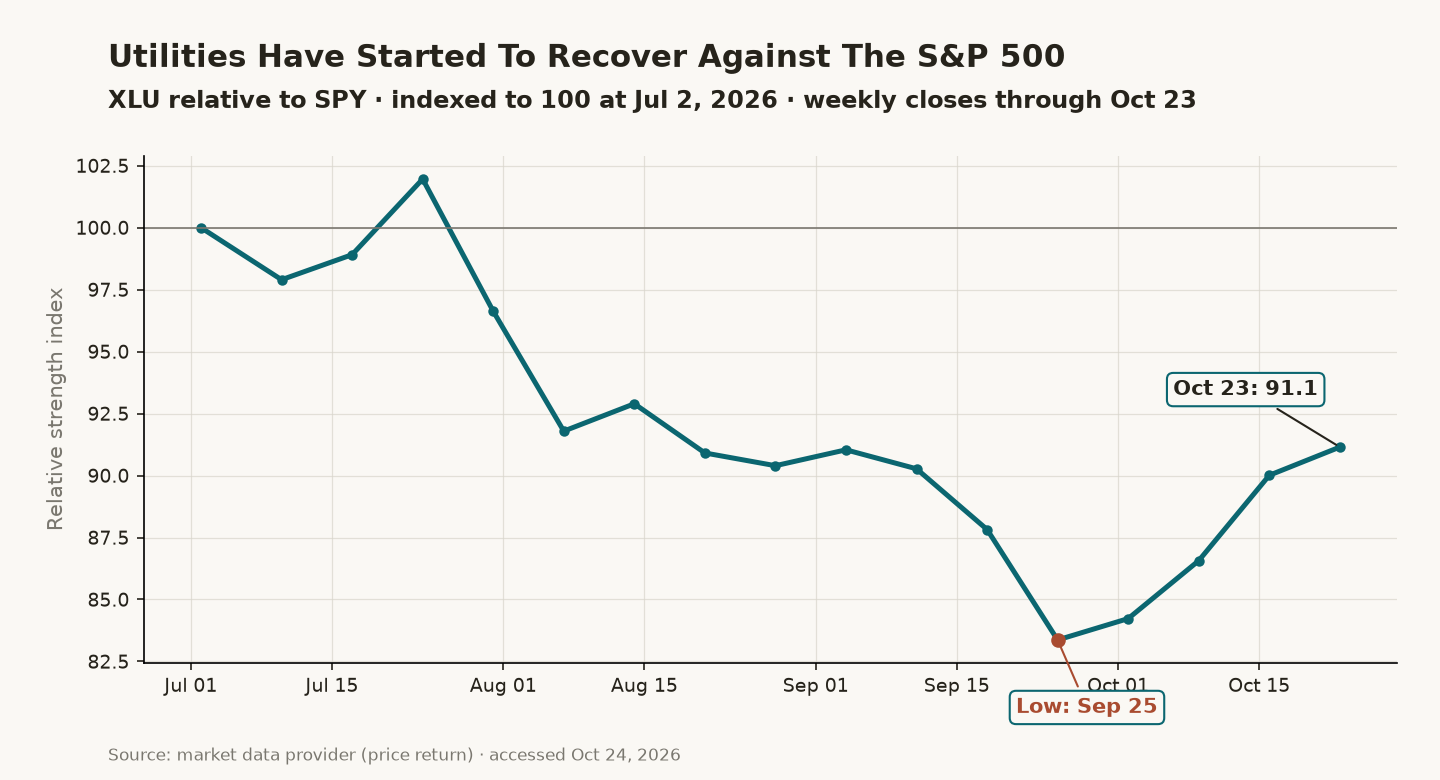
Chart 2: XLU relative to SPY bottomed on 9/25/2026 and has risen since. Data as of: 10/23/2026
WHAT THE FUND IS SHOWING
The ATAC Credit Rotation ETF (Ticker: JOJO) is a rules-based fund that seeks to rotate between higher-risk and lower-risk fixed income exposures based on intermarket signals. As of 10/24/2026, the Fund’s published holdings were TLT (80.09%), IEF (19.76%) and cash and other (0.14%).[3] In other words, the Fund is currently positioned in Treasury ETFs rather than high-yield credit.
I would not read that as a prediction. The Fund’s holdings can change as frequently as each week, and holdings at a point in time say nothing about future positioning or performance.
TREASURIES ARE NOT A SAFE HARBOR
It would be easy to describe a rotation into Treasuries as simply defensive. The data shows why that is incomplete. From 7/2/2026 through 10/23/2026, TLT fell 4.9% on a price basis and iShares iBoxx $ High Yield Corporate Bond ETF (HYG) fell 3.3%.[4] Long Treasuries lost more than high yield over that stretch, because the move was driven by rates as much as credit.
TLT has recovered 5.0% from its 10/2/2026 weekly close.[4] The point is that moving from credit to long-duration Treasuries swaps credit risk for interest-rate risk. In a rate-driven selloff, that swap does not protect against price declines. Investors should understand which risk a defensive sleeve is carrying.
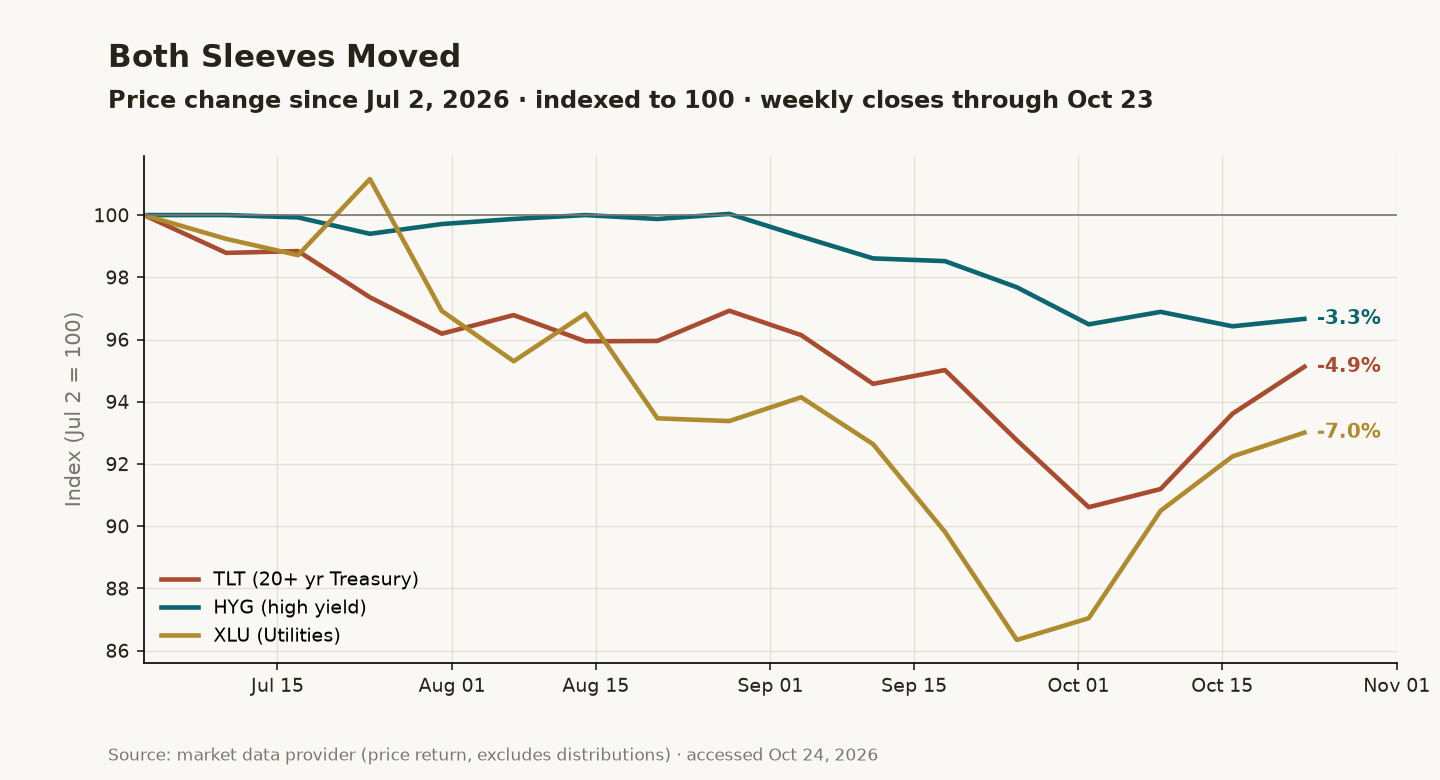
Chart 3: Price change since 7/2/2026 for TLT, HYG and XLU, indexed to 100. Data as of: 10/23/2026
WHAT THE YIELD NUMBER MEANS
The 30-day SEC yield on JOJO was 5.76% as of 9/30/2026.[3] A standardized yield measures the income earned during a 30-day period after expenses. It is not a forecast of future income, and it is not the same as a total return. Share prices can fall by more than the yield provides, especially when interest rates rise. Investors should read the Fund’s most recent 30-day SEC yield and prospectus for a full picture.
WHAT I AM WATCHING FROM HERE
First, whether Utilities keep outperforming the S&P 500. The Fund’s methodology is built around that relationship, so persistence matters more than any single week.
Second, whether the OAS holds above 3% or retraces toward 2.7%. A retracement would complicate the story. A hold would reinforce it.
Third, the direction of long-term rates. Because the Fund’s defensive sleeve is long-duration Treasuries, rates are a risk factor on both sides of the rotation.
CONCLUSION
The repricing that the July setup pointed to has started. Spreads are about 68 basis points wider than on 7/6/2026, volatility has jumped and bonds have sold off. That does not make the next move clear. It does make the case for a process that responds to signals rather than to a view.
The ATAC Credit Rotation ETF (Ticker: JOJO) is built to respond to changes in intermarket leadership, not to predict the trigger. In a market where credit has moved and rates have moved with it, that responsiveness is the point.
Michael A. Gayed, CFA
ENDNOTES
[1] Federal Reserve Bank of St. Louis, “ICE BofA US High Yield Index Option-Adjusted Spread (BAMLH0A0HYM2),” FRED, accessed 10/24/2026 (latest observation 10/22/2026), https://fred.stlouisfed.org/series/BAMLH0A0HYM2
[2] Federal Reserve Bank of St. Louis, “10-Year Treasury Constant Maturity Minus 2-Year Treasury Constant Maturity (T10Y2Y),” FRED, accessed 10/24/2026 (latest observation 10/23/2026), https://fred.stlouisfed.org/series/T10Y2Y
[3] ATAC Funds, “ATAC Credit Rotation ETF (JOJO),” accessed 10/24/2026: 30-day SEC yield 5.76% as of 9/30/2026; fund holdings as of 10/24/2026, https://atacfunds.com/jojo/ Holdings are subject to change.
[4] Closing prices for SPY and XLU (State Street) and HYG, LQD and TLT (iShares), 7/2/2026 through 10/23/2026, accessed 10/24/2026 via market data provider. Price return only; excludes distributions. https://www.ssga.com/us/en/intermediary/etfs and https://www.ishares.com/us
DISCLOSURES (JOJO)
The ATAC Credit Rotation ETF (Ticker: JOJO) is distributed by Foreside Fund Services, LLC.
*The 30-day SEC yield on The ATAC Credit Rotation ETF (JOJO) was 5.76% as of 9/30/2026. Current 30-day SEC yield may be higher or lower and can be found at https://atacfunds.com/jojo/. The 30-day SEC yield reflects the dividends and interest earned during the period, after the deduction of the Fund’s expenses, and is a standardized measure of yield. The standardized 30-day SEC yield formula does not reflect any fee waivers or reimbursements in effect.
Junk debt, also known as high-yield bonds or speculative-grade debt, refers to fixed-income securities issued by companies or governments with lower credit ratings, offering higher interest rates to compensate investors for the elevated risk of default.
The ICE BofA US High Yield Index Option-Adjusted Spread measures the yield differential between US corporate high-yield bonds and a spot Treasury curve, quantifying the risk premium for below-investment-grade debt in the US market.
The 10-year minus 2-year Treasury spread is the difference between the yield on the 10-year Treasury note and the yield on the 2-year Treasury note. A positive value indicates an upward-sloping yield curve; a negative value indicates an inverted curve.
ETF price changes cited in this article are price returns for the periods stated, exclude distributions, and are not the performance of any fund managed by the author or ATAC Funds.
Because the Fund is an actively managed ETF, the Fund’s performance will reflect the ability of the Fund’s investment adviser and sub-adviser to make investment decisions that are suited to achieving the Fund’s investment objective. Because the Fund may hold non-diversified positions, its performance may be more volatile than a diversified fund.
Because the Fund expects to change its exposure as frequently as each week based on short-term price performance information, changes to the Fund’s exposure may lag a significant change in an asset’s direction (up or down) if such changes first take effect at or near a weekend. Such lags between an asset’s performance and changes to the Fund’s exposure may result in significant underperformance relative to the broader equity or fixed income market.
The prices of fixed income securities may be affected by changes in interest rates, the creditworthiness and financial strength of the issuer and other factors. An increase in prevailing interest rates typically causes the value of existing fixed income securities to fall and often has a greater impact on longer duration and/or higher quality fixed income securities.
Past performance is no guarantee of future results.
The Fund’s investment objectives, risks, charges, expenses and other information are described in the statutory or summary prospectus, which must be read and considered carefully before investing. You may download the statutory or summary prospectus or obtain a hard copy by visiting https://atacfunds.com/jojo/. Please read the Prospectuses carefully before you invest.
Investing involves risk including the possible loss of principal.
Fund Risks: An investment in the Fund is subject to numerous risks including the possible loss of principal. There can be no assurance that the Fund will achieve its investment objective. Equity securities, such as common stocks, are subject to market, economic and business risks that may cause their prices to fluctuate. As with all ETFs, Fund shares may be bought and sold in the secondary market at market prices. The market price normally should approximate the Fund’s net asset value per share (NAV), but the market price sometimes may be higher or lower than the NAV. The Fund is new with a limited operating history. There are a limited number of financial institutions authorized to buy and sell shares directly with the Fund, and there may be a limited number of other liquidity providers in the marketplace. There is no assurance that Fund shares will trade at any volume, or at all, on any stock exchange. Low trading activity may result in shares trading at a material discount to NAV. Please see the prospectus and summary prospectus for a complete description of principal risks.
Debt securities are subject to the risk of an issuer’s (or other party’s) failure or inability to meet its obligations under the security. Multiple parties may have obligations under a debt security. An issuer or borrower may fail to pay principal and interest when due. The prices of fixed income securities may be affected by changes in interest rates, the creditworthiness and financial strength of the issuer and other factors. An increase in prevailing interest rates typically causes the value of existing fixed income securities to fall and often has a greater impact on longer duration and/or higher quality fixed income securities.
The Fund’s investments will be concentrated in an industry or group of industries to the extent the portfolio manager deems it appropriate to be so concentrated. In such event, the value of Shares may rise and fall more than the value of shares that invest in securities of companies in a broader range of industries. Investments in securities or other instruments of foreign securities involve certain risks not involved in domestic investments and may experience more rapid and extreme changes in value than investments in securities of U.S. companies.
The fund is distributed by Foreside Fund Services, LLC.
Learn more about JOJO at https://atacfunds.com/jojo/ Lead-Lag Publishing, LLC is not an affiliate of Tidal or Foreside Fund Services, LLC.
The Lead-Lag Report is provided by Lead-Lag Publishing, LLC. All opinions and views mentioned in this report constitute our judgments as of the date of writing and are subject to change at any time. Information within this material is not intended to be used as a primary basis for investment decisions and should also not be construed as advice meeting the particular investment needs of any individual investor. Trading signals produced by the Lead-Lag Report are independent of other services provided by Lead-Lag Publishing, LLC or its affiliates, and positioning of accounts under their management may differ. Please remember that investing involves risk, including loss of principal, and past performance may not be indicative of future results. Lead-Lag Publishing, LLC, its members, officers, directors and employees expressly disclaim all liability in respect to actions taken based on any or all of the information on this writing.