The Miss, the Message, and the Market That Refused
When the weakest jobs report of the year buys equities a rally and the bond market nothing at all, what exactly is the equity market rallying into?

Today’s Lead-Lag Report post is sponsored by GraniteShares
SKUU seeks 2x (200%) the daily percentage change of SK Hynix Inc. (SKHY). SKDD seeks -2x (-200%) of the same move. Swap-based, single-ticker, single-day: long or short SKHY without options and without borrowing shares.
Daily reset. Not buy-and-hold investments. Intended for active traders holding for very short periods, often a single trading day. Investors could lose the full value of their investment within a single day. Please read the prospectus.
Book a walk-through with GraniteShares
SKUU fund page + prospectus
SKDD fund page + prospectus
This material must be preceded or accompanied by a Prospectus. Investment in the Funds involves risk, including possible loss of principal. Not suitable for all investors; daily reset; short-holding-period tool.
The Funds are distributed by ALPS Distributors, Inc. GraniteShares is not affiliated with ALPS.
SSC Approval ID: GRS002577
DISCLAIMER – PLEASE READ: This is sponsored advertising content for which Lead-Lag Publishing, LLC has been paid a fee. The information provided in the link is solely the creation of GraniteShares. Lead-Lag Publishing, LLC does not guarantee the accuracy or completeness of the information provided in the link or make any representation as to its quality. All statements and expressions provided in the link are the sole opinion of GraniteShares, and Lead-Lag Publishing, LLC expressly disclaims any responsibility for action taken in connection with the information provided in the link.
By Michael A. Gayed, CFA · October 3, 2026
Key Highlights
September payrolls rose 29,000 against a 90,000 consensus, with July revised to a negative 10,000 and August cut to 133,000, a loss of 60,000 jobs from the summer. The unemployment rate ticked to 4.2 percent.
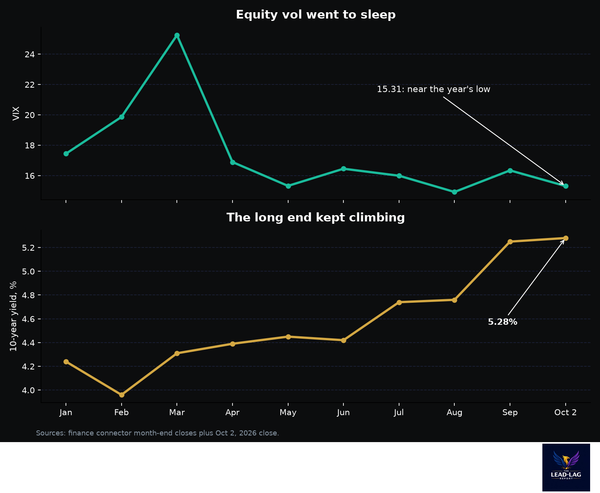
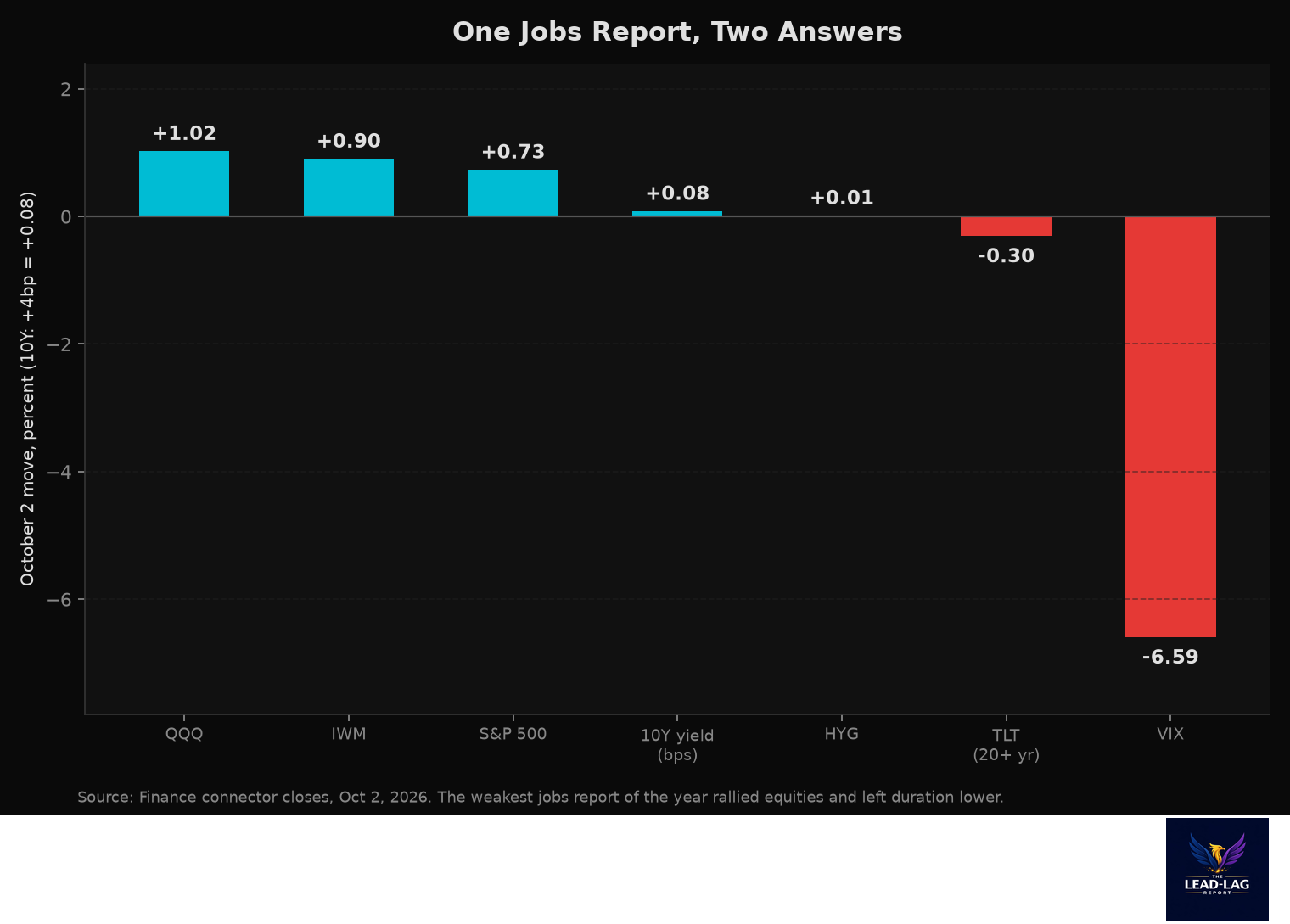
The S&P 500 rose 0.73 percent Friday to 7,722.72 and the VIX fell 6.59 percent to 15.31, while the 10-year yield still closed higher at 5.28 percent and long Treasuries fell. One print, two answers.
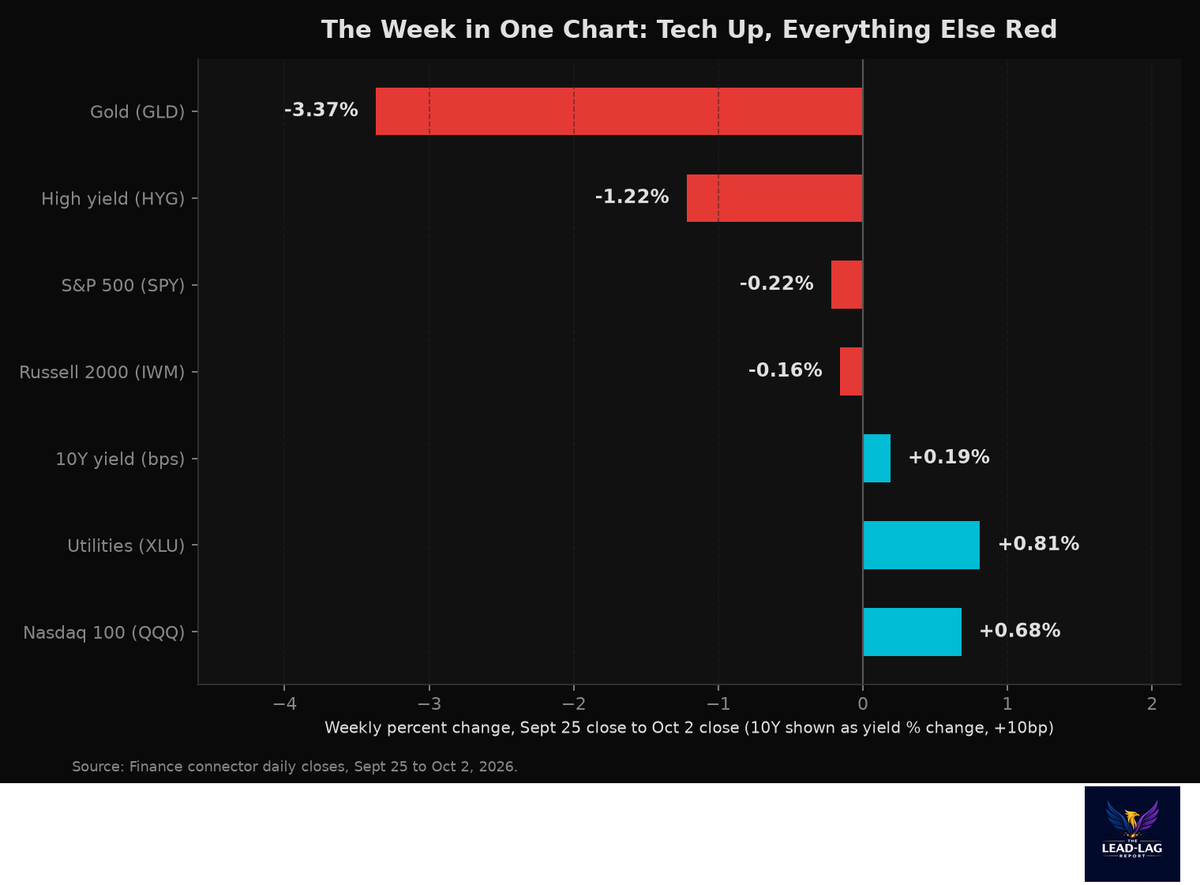
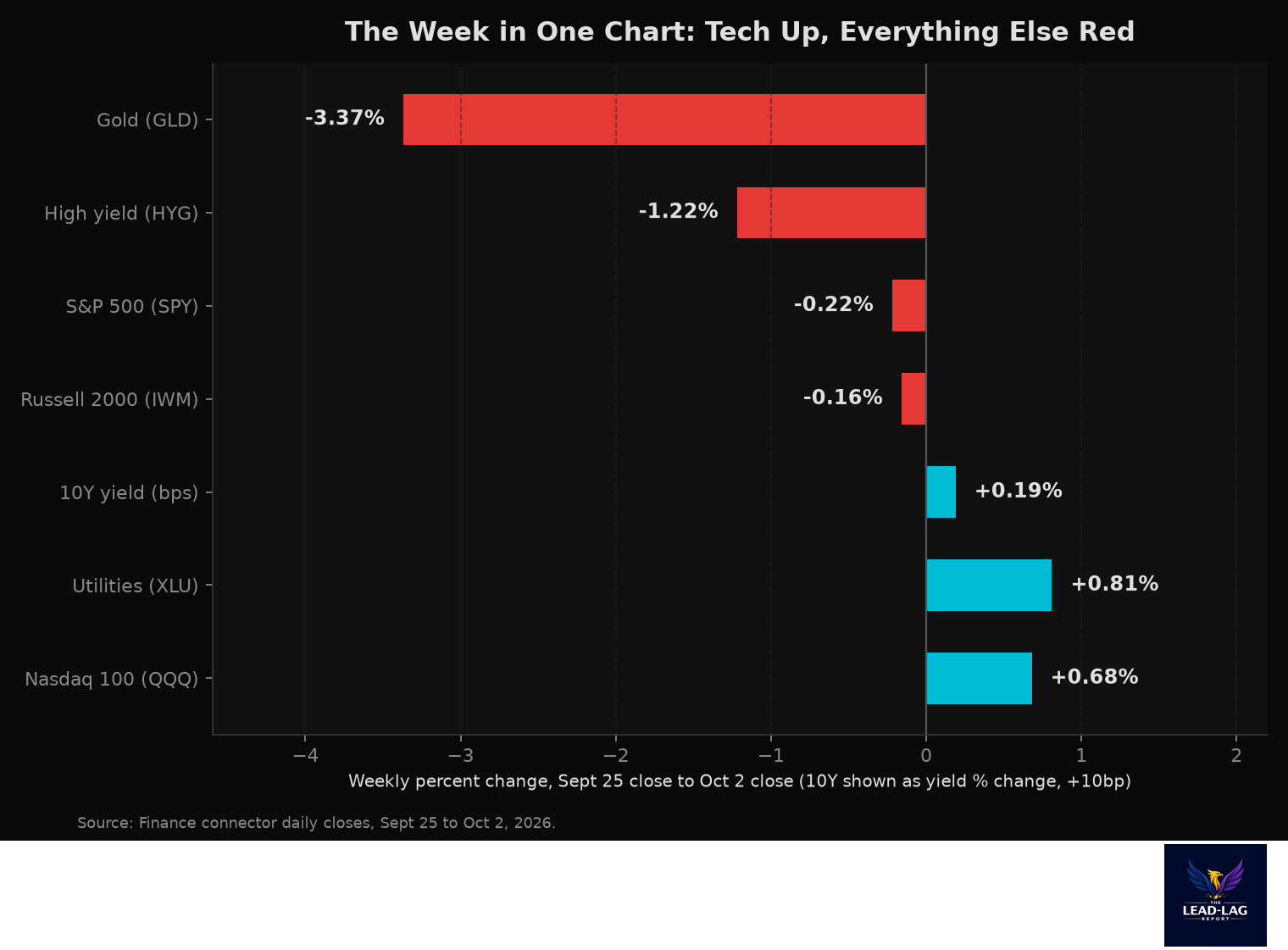
On the week the picture was redder than Friday suggested: SPY fell 0.22 percent, high yield fell 1.22 percent, gold fell 3.37 percent, and the 10-year rose 10 basis points. Utilities outperformed the S&P 500 by more than a full point.
Average hourly earnings grew 3.0 percent year over year against core CPI at 2.4 percent. The labor market stopped adding workers without loosening, and the wage number is the Fed's counterweight to the cut story.
THE SURFACE NARRATIVE
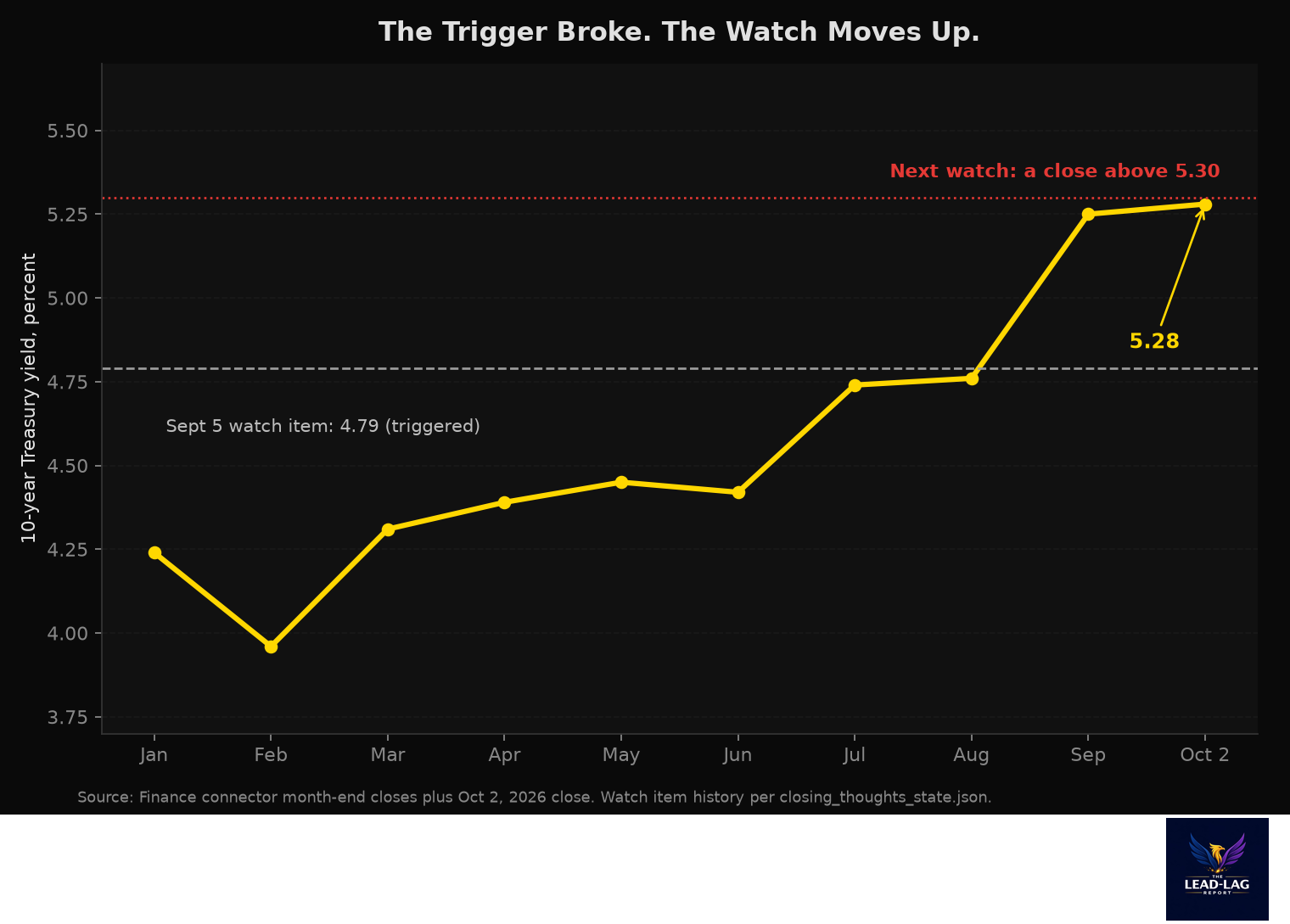
Last week's watch item is where this column has to start, because it triggered with authority. Four weeks ago the threshold was 4.79 percent on the 10-year Treasury, with the condition that a move above it, alongside elevated energy and unsoftening inflation, would confirm pressure on every risk asset that borrows. The 10-year closed this week at 5.28 percent. The trigger did not merely fire. It was left 49 basis points behind, somewhere in September.
The week the market showed investors was the Friday version. A badly missed jobs report landed, equities interpreted it as a rate-cut ticket, and the S&P 500 rose 0.73 percent to 7,722.72 with small caps up 0.90 percent and the Nasdaq 100 up 1.02 percent. The VIX collapsed 6.59 percent to 15.31. By the closing bell, the story the tape told was simple: bad news is good news again, the Fed will have to blink, and the rally's next leg has its catalyst.
That is the surface. The surface is incomplete.
THE REAL CATALYST
The real catalyst this week was not the jobs report. It was the bond market's refusal to participate in the story the equity market built on top of it. The 10-year rose 10 basis points on the week and four basis points on the day of the miss, closing at 5.28 percent. Long Treasuries fell on the day bad data arrived to rescue them. High yield, the part of the bond market that actually reads the labor market, dropped 1.22 percent on the week while the VIX spent the week below 17 and closed at 15.31.
That combination has consequences. The BIS attributed this year's global long-end climb to term premia driven by fiscal supply rather than policy expectations, and this week was the cleanest live demonstration of the distinction. A term premium prices the quantity of government debt the market must absorb. A payroll count does not change the Treasury issuance calendar, and Friday proved the market knows it: the data event arrived on schedule, the equity market reacted on script, and the long end declined the invitation to rally.
There is also the matter of what the week actually did, versus what Friday did. The S&P 500 fell 0.22 percent on the week. Gold, the hedge against the fiscal story the bond market keeps telling, fell 3.37 percent. High yield fell 1.22 percent. Only the Nasdaq 100 gained, up 0.68 percent, and utilities outperformed the S&P 500 by more than a full point on the week, which is not what a risk-on tape does with its defensive sector. Friday was a rally. The week was a grind lower wearing one.
DIVERGENCES BENEATH THE SURFACE
Three divergences define the setup. The first is the one Friday made famous: equities priced a Fed that cuts, duration priced a government that keeps borrowing, and the two trades now sit in the same portfolio pointing in opposite directions. The 10-year at 5.28 percent is the highest close of this move; the S&P 500 is within a percent of its high for the year. Both of those facts are true simultaneously, and they were not supposed to be.
The second divergence is inside the jobs data itself. The payroll count says the labor market is failing: 29,000 against a 45,000 trailing average, a July that now reads negative. The wage number says the labor market is not loosening: 3.0 percent earnings growth against 2.4 percent core inflation. The equity market traded the first number and ignored the second, because the second number is the one that argues against the cut. A central bank that hiked on September 16 for the first time in three years, into an oil shock, with wages outrunning core inflation, is a central bank whose blink is a hypothesis, not a baseline.
The third divergence is the calm itself. The VIX at 15.31 measures equity risk, and equity risk is genuinely quiet. But the volatility did not leave the system this year. It migrated into the very instrument portfolios use as their hedge, with the 10-year adding 104 basis points since January and TLT down 11.1 percent while the S&P 500 rose 11.2. The gauge everyone consults for risk is measuring the market where, for the moment, there is very little of it, while the market where the risk actually lives moves 30, 40, 49 basis points in single months. Cheap equity insurance against a shock that arrives through the discount rate is not cheap. It is aimed at the wrong address.
And then there is gold, which deserves its own paragraph because it quietly contradicted its own thesis this week. The fiscal-credibility hedge fell 3.37 percent, its worst week of the year, precisely while the fiscal-credibility story it hedges gained strength. The honest read is that a single down week is noise in a 7.6 percent annual gain, and that the gold-dollar pairing has spent this year refusing to obey the textbook in both directions at once. The dishonest read is to ignore it. Both hedges, the bond market's hedge and the equity market's, are being tested simultaneously, and a week in which both fell while the term premium rose is a week that cleared out complacency in both camps at once.
THESIS STATUS, WEEK OF OCTOBER 3
Standing thesis: The long end of the Treasury market trades fiscal supply and term premium, not the Federal Reserve's reaction function, and equity strength built on rate-cut expectations is therefore resting on a foundation the bond market has declined to pour.
This week's evidence: CONFIRMING. The 4.79 watch item triggered and was left far behind. Bad news could not buy duration a single good session. Credit softened while the VIX slept.
Margin of confidence: WIDENING. Each month the long end fails to respond to labor data, the fiscal-supply mechanism and the policy-expectations mechanism diverge further, and the second explanation loses ground.
What would break it: A sustained decline in the 10-year on data alone, a soft inflation print that pulls core toward 2.0, or a fiscal development that changes the supply picture materially. None of those appeared this week.
The bull case for the Friday rally deserves a fair hearing, because it is not stupid. If the labor market is genuinely turning, the Fed's September hike becomes the last one, the 5.28 percent yield becomes the ceiling of the cycle, and equities get the rate relief they have been denied all year, at index levels that already priced the pessimism out. That argument requires one specific condition: that the bond market is wrong about the term premium, and that the long end falls for data reasons once the data turn. Here is what the evidence shows instead: the long end has not fallen on bad data once this quarter, the BIS attributes its rise to supply rather than expectations, and September was the 10-year's largest single-month rise of the year at 49 basis points, which is not the profile of a market waiting to be talked down. The bull case is not impossible. It is simply unproven by everything observable, and this column prices on the observable.
THE WEEK AHEAD
The calendar ahead brings third-quarter earnings into full swing and the next inflation readings, and the framework says to treat both as evidence about one question only: does the labor market's turn reach the Fed before the term premium reaches equities. If the coming inflation prints show core holding near 2.4 with wages still running hotter, the cut story loses its second pillar and the equity rally is repricing off a premise the bond market never endorsed. If core breaks lower, the Fed gets its excuse and this column will say so plainly. The number that separates the scenarios is the wage line, and it is the one the Friday tape ignored.
The watch item, the one to verify in thirty seconds any day next week: a close in the 10-year above 5.30 percent would be the highest close of this entire move, past the 5.29 of September 30, into territory the bond market has not tested all year. Two consecutive closes above it would end the argument that Friday's equity rally was the beginning of anything. The utilities signal enters that test quietly favorable to defense, having outperformed the S&P 500 on the week, and utilities do not lead offensive regimes.
For the advisors reading: the client question of the moment is whether the Fed cuts next, and the honest answer is that the data argues both ways, which is exactly what a policy dilemma looks like from the inside. The signal says the risk in portfolios is not the VIX, it is the duration position and everything priced off the 5.28 percent long end. What would change that: a soft core inflation print, a wage number back under 2.8, or a 10-year that stops rising on bad news. Until one of those appears, the durable client conversation is about what their bonds are actually exposed to, not what their stocks are.
If you take nothing else from this week: the equity market and the bond market told two incompatible stories about the same jobs report, and the bond market has now been right for four consecutive weeks. The weight of observable systematic evidence currently favors the bond market's version. What would change that read is documented above.
Signals lead. Markets lag. The gap between them is where the opportunity lives.
The Lead-Lag Report is provided by Lead-Lag Publishing, LLC. All opinions and views mentioned in this report constitute our judgments as of the date of writing and are subject to change at any time. Information within this material is not intended to be used as a primary basis for investment decisions and should also not be construed as advice meeting the particular investment needs of any individual investor. Trading signals produced by the Lead-Lag Report are independent of other services provided by Lead-Lag Publishing, LLC or its affiliates, and positioning of accounts under their management may differ. Please remember that investing involves risk, including loss of principal, and past performance may not be indicative of future results. Lead-Lag Publishing, LLC, its members, officers, directors and employees expressly disclaim all liability in respect to actions taken based on any or all of the information on this writing.