Equal Weight Is Beating the S&P 500 by Five Points. The Fed Should Notice.
The Fed's October minutes show a committee one vote from hiking, and Governor Waller wants a half-point move. The average stock is up 12.9% this year against 7.8% for the index. Breadth says the economy can take the hike.


Today’s Lead-Lag Report post is sponsored by Tuttle Capital Management
Special Announcement
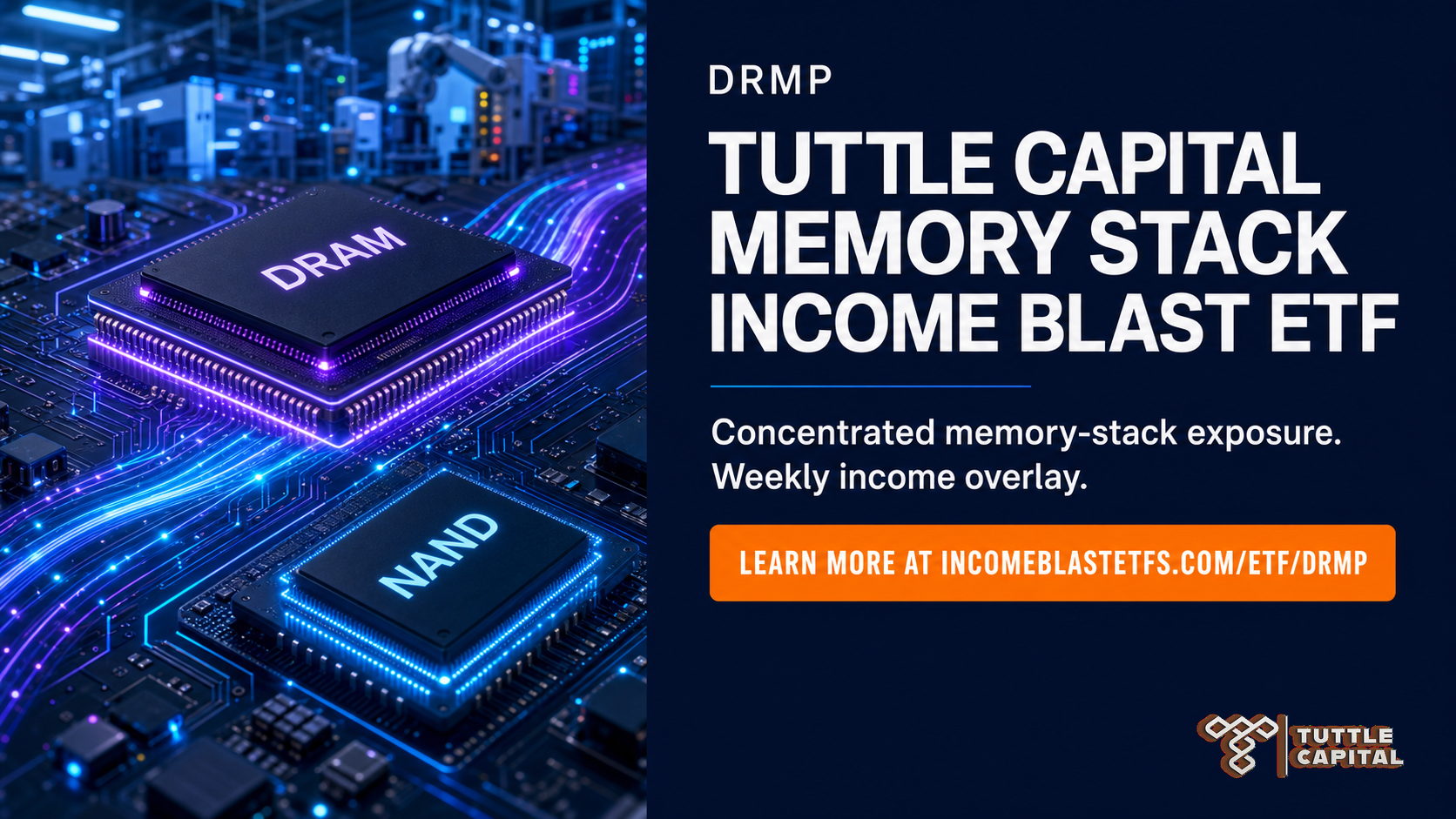
The memory chips used in many AI data centers — DRAM, NAND, high-bandwidth memory — could be one of the tightest bottlenecks in the entire AI buildout.
The Tuttle Capital Memory Stack Income Blast ETF (DRMP) seeks to provide concentrated exposure to that ecosystem while aiming to pay you along the way.
DRMP pairs a portfolio of “pure play” memory-stack companies (manufacturers, packaging, testing, and equipment suppliers) with a systematic put credit spread strategy, rolled on a recurring basis, with the objective of generating weekly distributable income.
A put credit spread is an options strategy in which the Fund sells a put option to collect premium income and simultaneously buys a lower-strike put option to help limit downside risk, resulting in a net credit to the Fund.
Distributions may include return of capital — review the fund’s distribution notices for the current breakdown.
Launched June 11, 2026 on Cboe.
Learn more at incomeblastetfs.com/etf/drmp
Investors should carefully consider the investment objectives, risks, charges, and expenses of the Tuttle Capital Memory Stack Income Blast ETF (DRMP) before investing. For a prospectus with this and other information about the Fund, please visit incomeblastetfs.com/etf/drmp or call (833) 759-6110. Please read the prospectus carefully before investing.
An investment in the Fund involves risk, including possible loss of principal. The Fund is not a complete investment program. The Fund is non-diversified, which means it may invest a relatively high percentage of its assets in a smaller number of issuers than a diversified fund. As a result, the Fund’s performance may be more volatile and may be more susceptible to risks associated with a single economic, political, or regulatory occurrence than a diversified fund.
There is no guarantee that the Fund will be able to make weekly distributions or that the level of distributions will be maintained over time. Distributions may include return of capital, which is generally not taxable but will reduce the shareholder’s cost basis and will result in a higher capital gain or lower capital loss when those shares are sold.
The Fund is subject to Equity Securities Risk, Investment Risk, Market Risk, ETF Investing Risk, Semiconductor and Technology Industry Risk, Memory Semiconductor Risk (DRAM/NAND/HBM), Advanced Packaging and OSAT Risk, Concentration Risk, Derivatives Risk, Options Risk, Put Spread Strategy Risk, Counterparty Risk, Liquidity Risk, Non-U.S. Investments Risk, Emerging Markets Risk, Transaction Cost Risk, Active Management Risk, Cash Redemption Risk, ETF Trading Risk, Cyber Security Risk, Tax Risk, ETF Structure Risk (including Authorized Participants/Market Makers and Liquidity Providers Limitation Risk, Cash Redemption Risk, Costs of Buying or Selling Shares Risk, Shares May Trade at Prices Other Than NAV Risk, and Trading Risk), Non-Diversification Risk, Large Capitalization Companies Risk, and New Fund Risk, among others.
The Fund’s put spread strategy is not covered and involves substantial risks, including the potential for losses if the underlying security declines below the lower strike price, market volatility impacting option premiums, and the possibility of assignment on the sold puts, which could require the Fund to purchase the underlying securities at unfavorable prices. The use of derivatives is a highly specialized activity involving investment techniques and risks different from those associated with ordinary portfolio securities transactions and may result in larger losses or smaller gains than directly investing in securities.
ETF shares may trade at a premium or discount to NAV. There can be no guarantee that an active trading market for Fund shares will develop or be maintained.
Distributor: Foreside Fund Services, LLC
DISCLAIMER – PLEASE READ: This is sponsored advertising content for which Lead-Lag Publishing, LLC has been paid a fee. The information provided in the link is solely the creation of Tuttle Capital Management. Lead-Lag Publishing, LLC does not guarantee the accuracy or completeness of the information provided in the link or make any representation as to its quality. All statements and expressions provided in the link are the sole opinion of Tuttle Capital Management and Lead-Lag Publishing, LLC expressly disclaims any responsibility for action taken in connection with the information provided in the link.
Equal Weight Is Beating the S&P 500 by Five Points. The Fed Should Notice.
The minutes say a committee that paused is one vote away from hiking. The average stock says the economy can take it.
MICHAEL A. GAYED, CFA
Key Highlights
- The Fed's October minutes, released Wednesday, show a 10-2 hold with two officials already voting to hike, and a statement that upgraded the economy's growth assessment from solid to strong. [1] [3]
- Governor Waller said Wednesday that a half-point December increase is probably necessary, and markets price roughly a 95% chance of a quarter-point hike on December 9. [2] [4]
- The equal-weight S&P 500 ETF is up 12.9% this year against 7.8% for the cap-weighted fund, a five-point gap in favor of the average stock. [5]
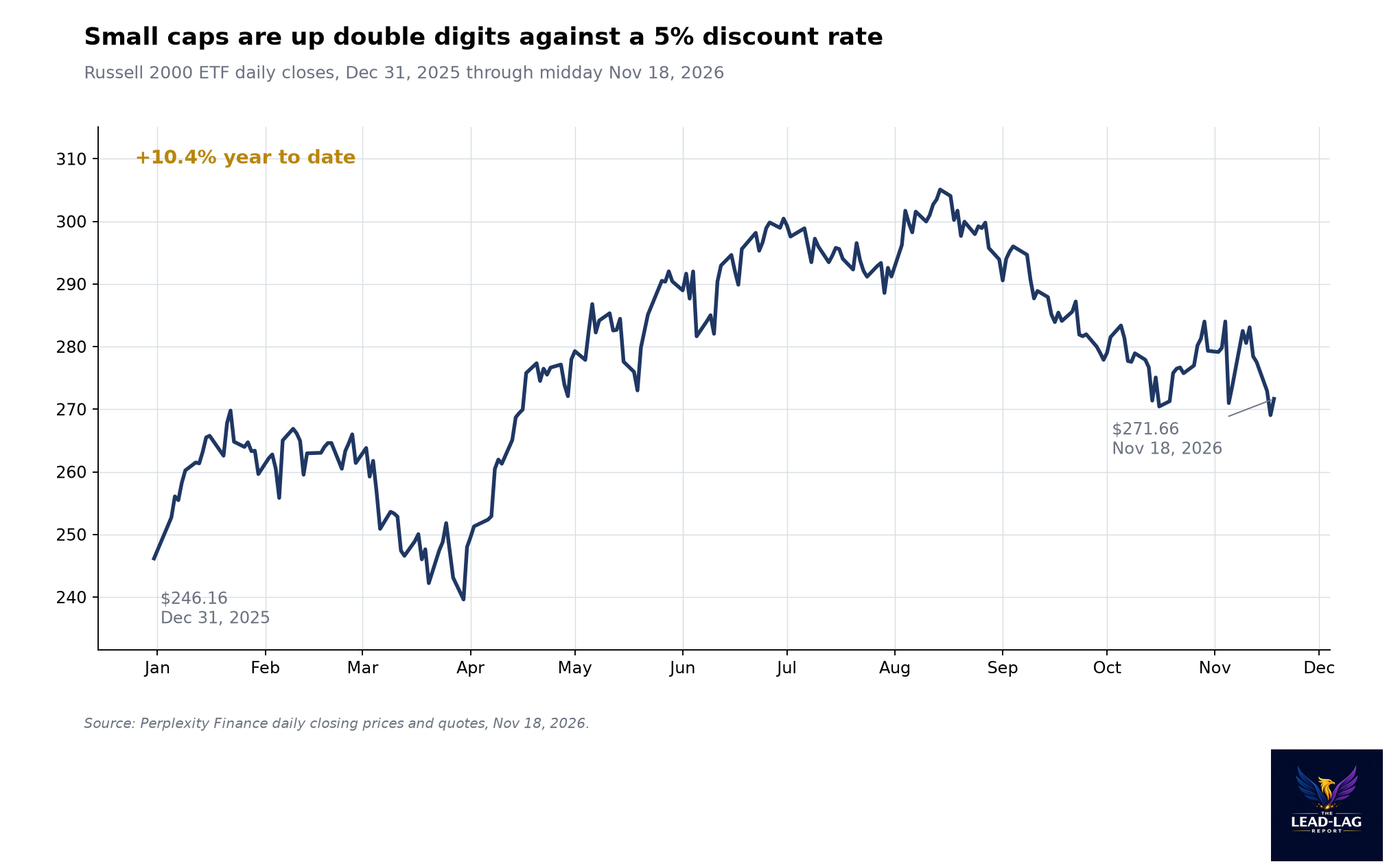
- The Russell 2000 ETF is up 10.4% this year with the 10-year Treasury yield above 5%, the combination that was supposed to be impossible. [5] [6]
- High yield spreads sit at 3.43%, up from their August low of 2.60% but far from stress levels, telling you credit is repricing the Fed, not default. [7]
The Day in One Paragraph
Wednesday was the Fed's turn to talk, and the committee's message was consistent with what the bond market has been saying for a month: the next move is up, the only question is the size. The October minutes landed at 2 PM ET showing a 10-2 hold, with Governor Cook and President Hammack already voting for a hike in October. [1] Governor Waller spent the morning saying a half-point move in December is probably necessary to protect the Fed's credibility. [2] None of that is a surprise anymore, and that is the point. When the market has fully priced a hiking Fed and stocks sit near their highs, the risk is no longer the hike. It is what the hike says about how strong the economy actually is.
What the Minutes Actually Said
The October 27-28 meeting held the target range at 3.75% to 4.00% after September's hike, the first in three years. The statement called economic growth strong, noted that domestic spending has been resilient, and observed that productivity growth is strong and capital investment is robust. [1] [3] Two officials dissented in favor of an immediate quarter-point increase. [1] The minutes are the first document showing how many of the other ten were close to joining them, and the debate since the meeting has only moved one direction: from whether to hike to how much and how fast. [4]
Read that against the market's own vote. Traders now price roughly a 95% chance of a quarter-point hike on December 9, with a smaller tail on a half-point move. [4] The 10-year Treasury yield has held above 5% through it all. [6] A Fed hiking into an economy its own statement calls strong, with inflation still above target, is not fighting recession. It is withdrawing accommodation from an expansion that no longer needs it. That is a mid-cycle configuration, not a late one.
The Average Stock Agrees
The chart below is the equity market's own minutes. Where do the cap-weighted S&P 500 ETF and the equal-weight version stand, each indexed to 100 at the December 31 close? The equal-weight fund is up 12.9% this year. The cap-weighted fund is up 7.8%. [5] The average stock is beating the index by five points.
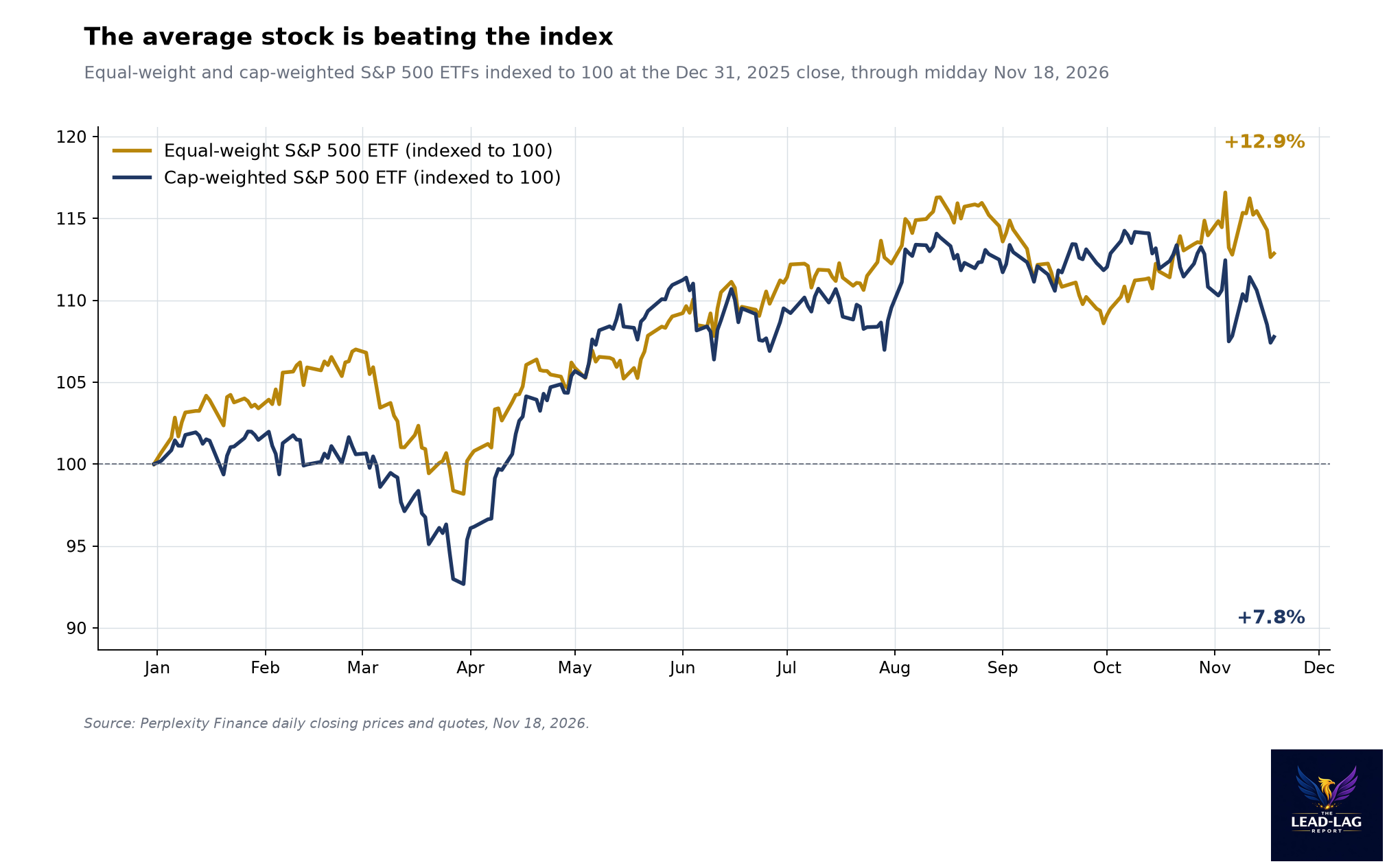
That gap matters more than any single Fed sentence. When a handful of mega caps carries the index, a hiking Fed is a direct multiple tax on the trade's leadership. When the average stock outperforms, the market is telling you earnings power is distributed across the economy, not concentrated in the discount-rate-sensitive top. Breadth like this is what allows a hiking cycle to extend without breaking the market. It has rarely been present at the end of cycles. It is present now.
Small Caps Carrying the Discount Rate
The same story sits in small caps. The Russell 2000 ETF is up 10.4% this year, against a 10-year yield that spent most of November above 5%. [5] [6] Small companies carry more floating-rate debt, refinance more often, and depend more on domestic bank credit than the mega caps do. They are the market's most rate-sensitive cohort, and they are up double digits anyway. That is not the behavior of an economy being squeezed by policy. It is the behavior of one growing into its rates.
Credit confirms the read. The broad high yield spread is 3.43%, up from its August low of 2.60% but a full percentage point inside anything that looks like default pricing. [7] Credit is charging more for the Fed's path. It is not forecasting a default cycle. Combine that with positive breadth and a Fed statement that calls growth strong, and the configuration is the one that historically extends cycles: policy tightening, credit functioning, leadership broad.
What I Am Watching
The December 8-9 meeting is the event, with the decision and new projections on December 9. Before that, October PCE lands November 25 and the November jobs report December 4, the two prints that decide whether Waller's half-point gets more than a tail. For the market's purposes, the level to watch is the one breadth already answered. If the equal-weight fund holds its lead over the index through the December hike, the market has absorbed the Fed's path. If it rolls over while the cap-weighted index holds, the hike started taxing the average company, and that is the signal the cycle is turning. Position for the former, watch for the latter. Few understand this.
Notes
- Capital Finance Bureau, FOMC Minutes Preview: October Hold, Two Dissents for a Hike, November 18, 2026: October 27-28 meeting held the target range at 3.75% to 4% in a 10-2 vote; Lisa Cook and Beth Hammack dissented preferring a quarter-point increase; statement said economic activity is expanding at a strong pace, domestic spending has been resilient, productivity growth is strong and capital investment is robust
- CNBC, Fed's Waller says central bank may need to shock people, November 18, 2026: Waller said a half percentage point increase is probably necessary at the December 8-9 FOMC meeting, in a live CNBC interview
- Newsquawk, Primer: Today's Fedspeak, November 18, 2026: the October statement upgraded its assessment of economic growth from solid to strong; a 25bp hike on December 9 is more than fully priced
- CNBC, Treasury yields hold steady as investors look ahead to Fed minutes, November 18, 2026: FOMC minutes from the October 27-28 meeting, a 10-2 hold at 3.75% to 4%, due 2 PM ET; traders price a 95% chance of a quarter-point December hike per CME FedWatch
- Perplexity Finance, quotes and daily closing prices for the equal-weight S&P 500 ETF (216.19, up 12.9% from $191.56 on December 31), S&P 500 ETF (734.89, up 7.8%) and Russell 2000 ETF (271.66, up 10.4%), through midday November 18, 2026
- ATFX Daily Market Highlight, November 18, 2026: 10-year Treasury yield above 5% (5.109% Tuesday close); S&P 500 closed Tuesday at 7,340, down 1.03%
- FRED, ICE BofA US High Yield Index Option-Adjusted Spread (BAMLH0A0HYM2): 3.43% on November 17, 2026, against a 2026 low of 2.60% in August and a high of 3.48% on November 5
The Lead-Lag Report is provided by Lead-Lag Publishing, LLC. All opinions and views mentioned in this report constitute our judgments as of the date of writing and are subject to change at any time. Information within this material is not intended to be used as a primary basis for investment decisions and should also not be construed as advice meeting the particular investment needs of any individual investor. Trading signals produced by the Lead-Lag Report are independent of other services provided by Lead-Lag Publishing, LLC or its affiliates, and positioning of accounts under their management may differ. Please remember that investing involves risk, including loss of principal, and past performance may not be indicative of future results. Lead-Lag Publishing, LLC, its members, officers, directors and employees expressly disclaim all liability in respect to actions taken based on any or all of the information on this writing.